


Opportunities for exporting ingredients and raw materials to Japan


03.11.25
FOODEX JAPAN 2025
PRODECA is organising the group participation of companies at FOODEX JAPAN 2025, Japan's most important international food and beverage trade fair and one of the leading events in the Asia-Pacific region, now in its 50th edition.

10.08.24
Everything you need to know to export agri-food products to Japan
A course offering a complete overview of the legal, cultural and logistical requirements for successfully starting and sustaining business in Japan, an advanced and demanding market with high potential for Catalan agri-food products.
This report analyses the opportunities the Japanese market offers Catalan food companies that produce ingredients and raw materials. Japan faces geographical constraints and a notable scarcity of natural resources, making it a major importer of such foods for its food industry.
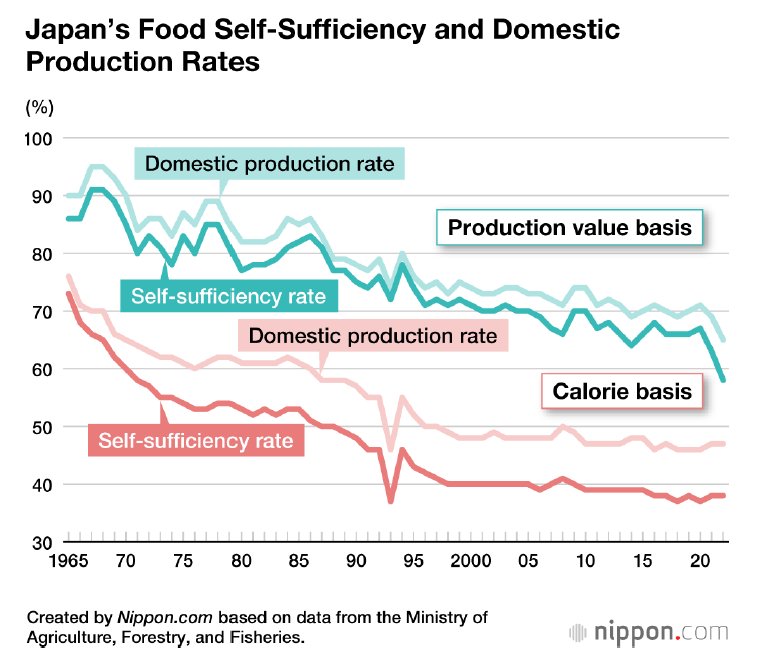
Japan's food self-sufficiency rate fell to a record low of 58% in production value terms in fiscal year 2022, according to Japan's Ministry of Agriculture, Forestry and Fisheries. These figures show the scale of the Japanese market and its reliance on imports to supply its food industry, which represents a significant opportunity for Catalan companies.
However, although Japan imports 42% of its food needs, it is striking that only around 5% of the products sold in supermarkets are international. Most imports are concentrated in raw materials and semi-processed products for the local food industry.
Overview of the Japanese market
Japan, the world's fourth largest economy with a nominal GDP of around USD 5 trillion, has 125 million inhabitants facing rapid ageing and a low birth rate, factors that affect consumption trends and food demand. In 2024, income per capita stands at around USD 34,000, reflecting mid-to-high incomes, although the country faces challenges such as high public debt at 250% of GDP, mainly held by domestic institutions. The labour market shows a low unemployment rate of 2.5%, but with problems such as low female participation and precarious employment, which limit productivity and long-term growth. Rising consumer prices, driven by the weak yen and higher import costs in key sectors such as energy and food, have changed consumption habits, although inflation is expected to remain at around 2% by the end of 2024.
Japan also faces geographical constraints and a scarcity of natural resources, making it a significant importer in order to meet its energy and food needs. Its food self-sufficiency rate, in calorie terms, stands at around 38%, indicating that the country produces just over a third of the calories its population consumes. In production value terms the rate is 58%, demonstrating a significant reliance on imports to meet domestic demand.
The yen's depreciation has increased import costs, made foreign products more expensive and affected local companies that depend on imported goods. However, this situation has encouraged Japanese importers to look for more competitive international suppliers and higher value-added products to offset the price increases.
Analysis of the ingredients and raw materials market in Japan
Japan is self-sufficient in a limited number of food products, most notably in rice, the staple food, of which it produces 98% of domestic consumption with minimal imports. Other products with high self-sufficiency include eggs i poultry products, tea (especially green tea), milk and the fresh vegetables, which cover much of domestic demand. Even so, local production covers only 40% of meat consumption and 50% of fish.
In 2023, according to Trade Economics, Japan's food imports reflect its heavy reliance on foreign suppliers. The main import categories are fish and seafood (USD 10.04 billion), meat and meat products (USD 9.88 billion), cereals (USD 8.13 billion) and preparations of meat, fish and seafood (USD 5.77 billion), among others. The main supplier countries are China, the United States, South Korea, Thailand and Brazil.
These figures demonstrate the scale of the Japanese market and its reliance on imports, mainly of ingredients and raw materials essential to its food industry rather than finished products for direct consumption.
Japan's food industry sector
Japan's food industry is a cornerstone of the national economy, contributing significantly to GDP and employing millions of people. It is worth JPY 42.5 trillion, roughly 10% of the country's GDP. The sector is dominated by large corporations.
Examples of food industry products Japan imports in large quantities:
- Meat
- Fish
- Cereals, flours, semi-processed and frozen bakery and pastry products
- Fruit and vegetables. To protect Japanese crops from the Mediterranean fruit fly, exporting fruit and almost all fresh vegetables to Japan from Europe is banned, but juices, purées and frozen, dried, preserved or pickled fruit and vegetables can be exported.
- Nuts
- Concentrated grape must, bulk wine
- Bulk olive oil
- Herbs and spices
- Fruit and vegetable extracts
- Milk products: milk powder, whey, rennet, protein
- Egg products: liquid white, liquid yolk, protein
- Additives: preservatives, gelling agents, colourings
Strategies for entering the Japanese market
Japan is self-sufficient in a limited number of food products, most notably in rice, be it noted
Partnering with specialist importers. To enter the Japanese market it is essential to work with importers specialising in the food industry, as almost no company in the sector imports directly. These importers have first-hand knowledge of food manufacturers' needs, consumer preferences and sector trends, helping navigate regulations and making connections with distributors and other relevant players. They also provide detailed specifications so products can be adjusted to market requirements.
Taking part in specialist fairs. An effective way to find importers is to exhibit at specialist fairs. One of the most important is Foodex Japan.
Studying Japanese regulations. It is necessary to know the rules on additives, pesticide residues, approvals for certain products, especially meat, and the documentation required for export.
Knowing and complying with regulations. Japan has strict food safety and quality standards. Importers often carry out an approval process through factory visits and inspections. Recommended actions include obtaining certifications such as ISO 22000 or HACCP and preparing all the necessary documentation, including certificates of origin and laboratory analyses.
It is essential to respect Japanese business customs and practices, maintaining smooth, transparent communication with customers.
Advantages of exporting ingredients and semi-processed products
- Lower barriers to entry: ingredients and semi-processed products generally face fewer regulatory restrictions than finished products, especially regarding labelling and end-consumer certifications.
- Adapting to technical specifications: Japanese importers provide detailed specifications on product characteristics such as dimensions, packaging formats and quality standards, making it easier for Catalan exporters to adapt their products to market needs.
- Lower marketing and promotion costs: there is less need to invest in branding, attractive packaging or advertising campaigns aimed at the end consumer, reducing the associated costs.
This article is based on the report "Opportunities for Catalan ingredient and raw material companies in the Japanese food market" produced by Argos Consulting Network.

03.07.23
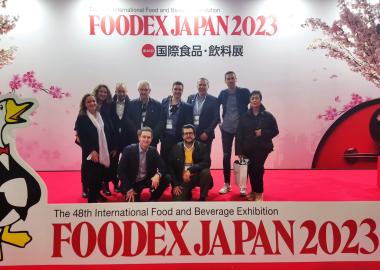
Catalan companies promote themselves again at Foodex Japan
Around fifteen Catalan food and drink companies took part in Foodex Japan 2023, held in Tokyo from 7 to 10 March, on the Catalonia stand organised by PRODECA. Catalan companies have thus returned to the Japanese fair after recent editions w

03.15.24
Catalan food and cuisine gain ground in Japan
Following the success of the first edition, this weekend sees the 2nd Catalan Food Street Show, a showcase of Catalan food in central Tokyo where more than 3,000 Japanese consumers are expected to taste and buy over a hundred Catalan produc

04.12.24
Dairy trends in Japan
Mintel has produced a report on dairy product trends with some very interesting insights into a mature category. Trends in Japanese products often spread to other European markets, as Japanese consumers are generally eager for novelty. Belo