


Glocal Food: from trend to purchase driver
In most sectors globalisation is changing how we get information and how we shop. This is also happening to some extent in the food sector, though less intensely. Fortunately, we still have great diversity in traditions, product ranges and ways of cooking in each region. If we look at the ranking of the 50 most-chosen FMCG brands in Spain, more than half are domestic. And if we separate food, beauty products and household cleaning products, it is in food that we find the most non-multinational brands. Because, with food, the closer the better.
What's more, it is a growing phenomenon. Small, local brands generally grow faster than those belonging to large corporations. In a recent study we found that these small manufacturers, which accounted for a third of household spending, were growing in 72% of the main food, drink and household product categories.
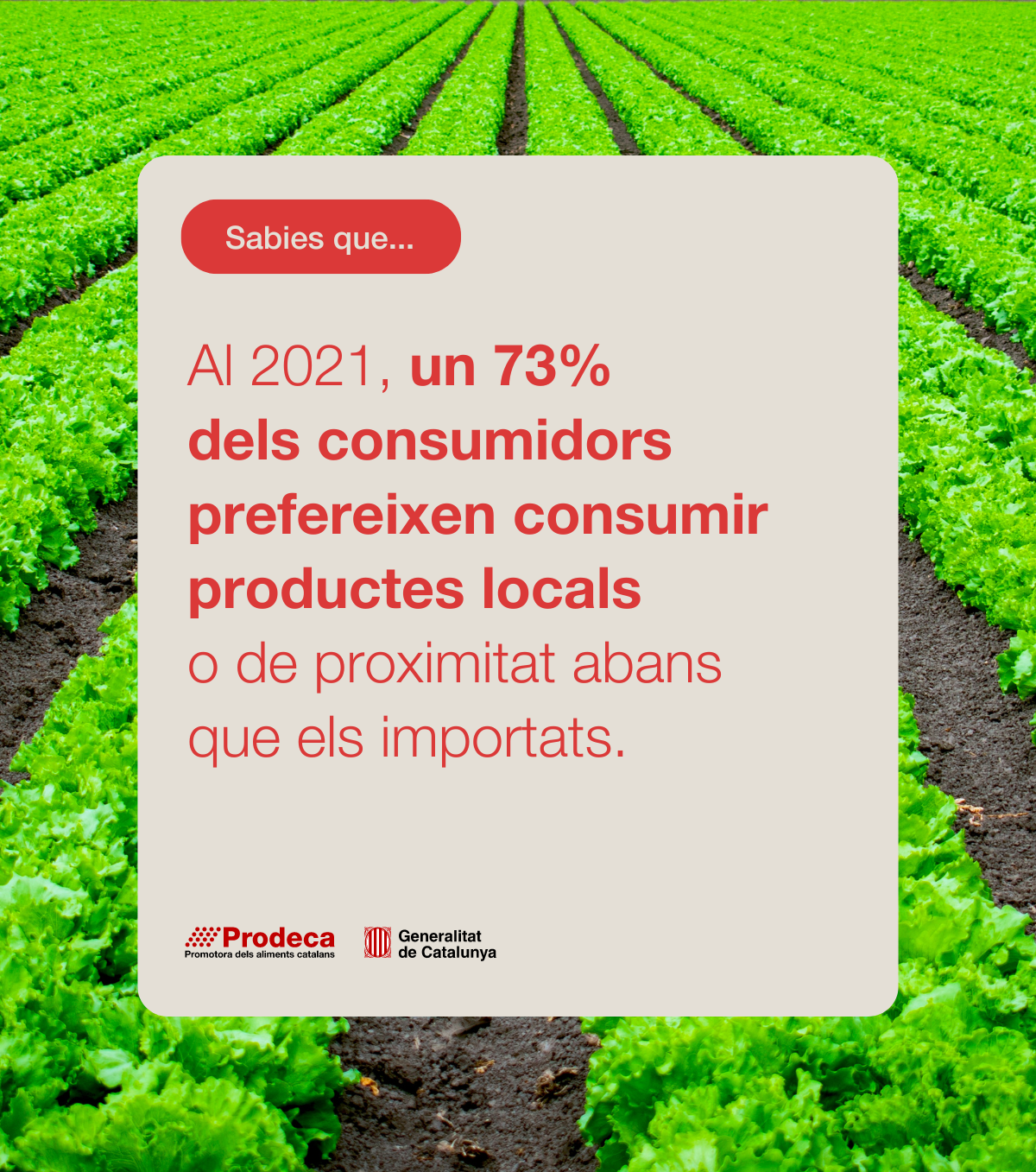
Over the last the share of people who say they prefer local produce over imports has grown to 73% of the population in 2021. But what we say when asked is often different from what we end up doing. Private label, where the product's origin is often not easy to identify, already accounts for more than 40% of household spending. And 76% of households buy kiwis to eat at home, even though we know much of that fruit is grown far from here.
Proximity matters, but it isn't everything. Other factors such as price, specific product benefits or convenience work against buying local produce, and we cannot underestimate them.
An important factor is that we increasingly dislike spending time on the weekly shop, and fewer and fewer people are willing to travel further to reach their preferred supermarket. One consequence is that we concentrate more purchases in fewer stores. As a result, the market share of specialist retail (butchers, greengrocers, markets, etc.) has fallen from 38% to 24% over the last 20 years. The clear winners have been supermarkets offering low prices and a very limited range of manufacturer brands. Today, therefore, the main reason for choosing where to shop is proximity, followed by value for money and the possibility of doing the whole shop in one trip.
There is one change in shopping habits that could alter this order: e-commerce. This channel offers an unprecedented breadth of range, access to shoppers without necessarily opening stores, and purchase patterns whose frequency is very different from physical shopping. That said, selling without the shopper handling the product requires a great deal of consumer trust in the brand or the seller, especially when buying fresh produce. And there is much room for improvement here. This partly explains why penetration today is only 36% of households, or why only 1.6% of fresh meat is sold online while in markets such as soft drinks the figure is 4%.
So, if we want to sell our local produce, we have to be where the consumer goes to shop. We cannot wait for consumers to make several shopping trips before they find us. And if we want to grow we will have to get into large-scale retail, since specialist retail will keep eroding and with it the chances of being bought. It is also critical to bear in mind that growing sales means winning more shoppers. Trying to build loyalty is not enough, because brands are constantly losing shoppers. Therefore, we must rethink our growth strategies if they are not fully focused on winning shoppers, and the best way to do that is to be available in as many stores as possible.
Joan Riera
Food director at Kantar Worldpanel

03.09.22
Local produce gains ground in Catalans' shopping baskets
PRODECA – Department of Climate Action, Food and Rural Agenda has presented its 'Mapping of the consumption and marketing of local agri-food products', which sizes the market value of local food.

03.10.22
The 2nd Catalan Food Forum makes the case for the commercial competitiveness of local sourcing
More than 350 companies, players and professionals from the agri-food sector took part in the 2nd Catalan Food Forum held this morning at El Born Centre de Cultura i Memòria in Barcelona.