


10.14.26
Formats and markets to add value to wild boar meat
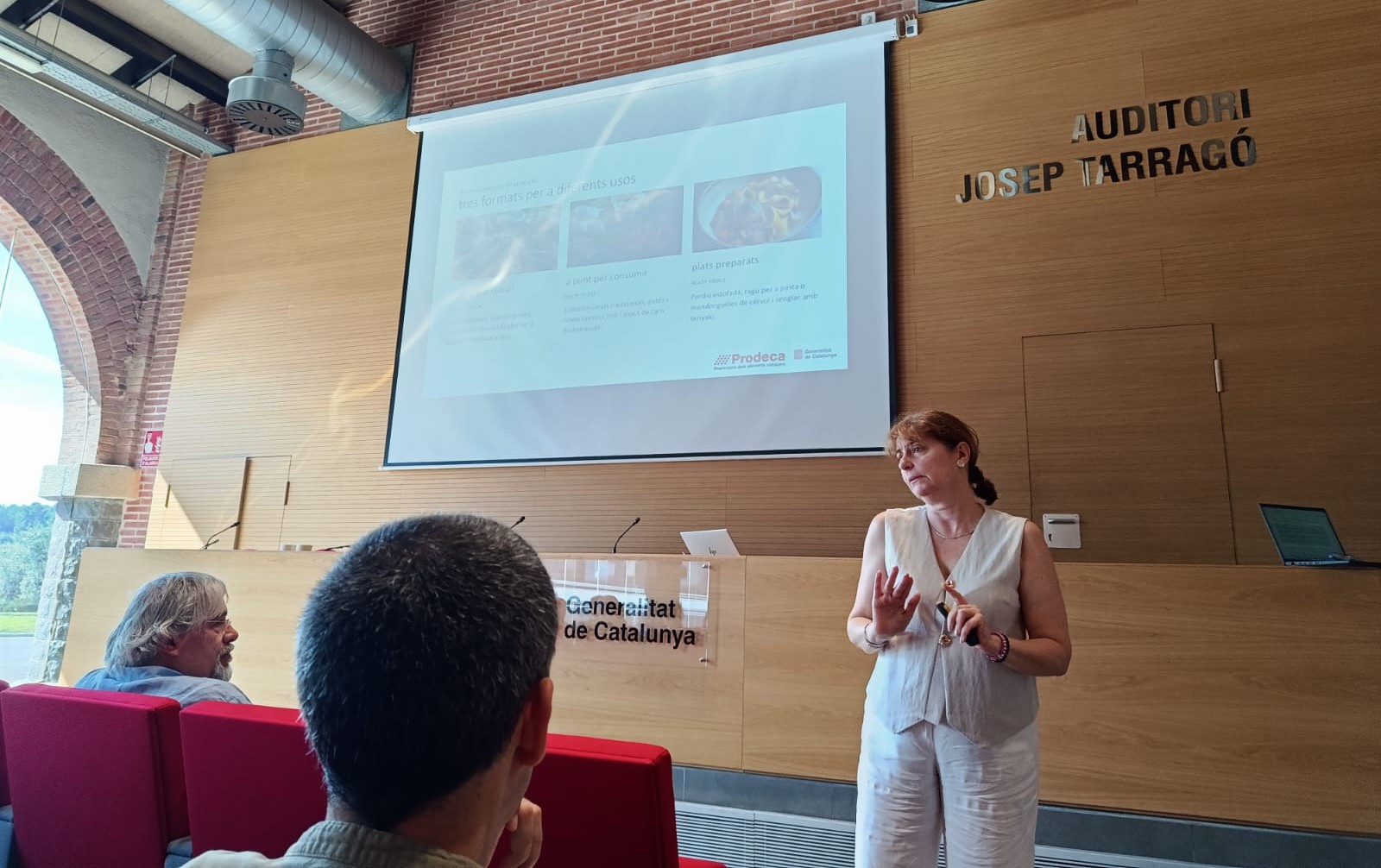
The valorisation of wild boar meat, the development of new processed products and the diversification of markets were the focus of Prodeca's participation in the technical event Building the wild boar value chain in Catalonia: social context and regulations, held this Wednesday, 14 October, at the IRTA Torre Marimon facilities in Caldes de Montbui.
The meeting, held within the framework of the Annual Technology Transfer Plan (PATT), brought together representatives from the public administration, the hunting sector, the food industry and research to address the challenges associated with wild boar management and the possibilities for using its meat as food.
On behalf of Prodeca, the head of the meat and halal sector, Susanna Barquín, gave the presentation Wild with added value. New formats for new markets, focusing on the possibilities of transforming game meats into products adapted to new consumer preferences and to the needs of commercial channels.
An export activity of 57.72 million euros
During her presentation, Susanna Barquín presented foreign trade data for a selection of four tariff codes related to meat from non-domestic pigs and other game meats. According to the data analysed by Prodeca, Catalonia exported €57.72M in 2025 for the products included in this selection, a figure representing 47.8% of the total for Spain. The exported value fell by 12% compared with 2024, while the whole of Spain recorded a decrease of 2.4%.
The data also show a high geographic concentration. China accounted for 50.3% of the value exported from Catalonia, while together with France and Italy it accounted for 71.6% of international sales. These figures, which correspond to a selection of tariff products and not exclusively to wild boar meat, help to gauge the existing export activity and to identify commercial diversification as a line of work for the sector.
In this regard, Prodeca has proposed that the marketing of frozen meat, which currently allows significant volumes to be sold, could coexist with the development of products with higher added value, aimed both at the local market and at European markets.
Burgers, cured meats and ready meals: new formats to expand consumption
One of the main focuses of the presentation was the possibility of expanding the supply of wild meats through new formats adapted to purchasing and consumption habits. Susanna Barquín identified three main development categories: ready-to-cook products, ready-to-eat products and ready meals.
Among the alternatives proposed, burgers, meatballs, skewers, cured sausages, pâtés and cooked dishes stand out. These preparations would make it possible to explore new consumption occasions and to adapt recipes, portions and presentations to different market segments.
The presentation also included the results of studies carried out by IRTA on consumer perception and the acceptance of processed products made with wild boar meat. In a test with 100 consumers from the province of Barcelona, wild boar burgers obtained an average flavour rating of 7 out of 9, while 43% of participants said they liked them very much or extremely much.
These results constitute a first starting point for exploring the product's commercial potential, although Prodeca stressed the need to complement acceptance tests with studies on price, presentation, distribution channels and actual purchasing behaviour.
Connecting wild meats with new audiences
Beyond innovation in recipes and formats, the presentation addressed the importance of reviewing how game meat is presented and communicated to consumers.
In this area, Prodeca has proposed exploring the concept of wild meats as an alternative commercial communication approach, with the aim of analysing whether this designation may be closer and more appealing to certain segments, especially among young adult consumers.
The proposal is based on the possibility of building a narrative centred on origin, product characteristics and culinary applications, without losing transparency about the species, composition and traceability. Susanna Barquín also raised the need to study the particularities of the different European markets, adapting preparations to the gastronomic preferences and consumption habits of each country.
From food innovation to commercial viability
Another message from the presentation was the need to connect the technological development of products with a commercial strategy based on data and market validation. Prodeca presented a development process that combines analysis of distribution channels, consumer research, tastings, sales tests and economic evaluation of each proposal.
The aim is for companies to be able to determine which products have commercial potential before committing investment in production, packaging or promotion. This methodology must also take into account the availability of raw material, production capacity, food safety, logistics and the ability to maintain a regular supply to buyers.
Prodeca's participation in this event is part of its work supporting the competitiveness and commercialisation of the Catalan agri-food sector, through providing market knowledge and identifying avenues for product diversification. Collaboration between research, the meat industry and commercial operators is thus presented as a necessary element for advancing the development of a wild meat offer adapted to consumer needs and capable of generating economic activity for companies in the sector.
10.09.26
Wild boar meat under debate: new products and marketing channels
On 14 October, IRTA Torre Marimon will host a day on the value chain of wild boar meat. Prodeca will take part with a presentation by Susanna Barquín on new product formats and their marketing in the local market and European markets. Inter