


The organic food market in the United States

Descarrega el document

Informe - El mercat d'aliments orgànics als Estats Units
11.25.24
Everything you need to know to export agri-food products to the United States
A course designed to offer a complete overview of the legal, cultural and logistical requirements for successfully starting and sustaining business in the United States, a highly competitive market with major opportunities for Catalan agri-food products. We will also look at the possible impacts of Donald Trump's election as US president and his likely tariff policies, to understand how they may affect trade relations and export strategies.

03.16.22
Get to know the online food distribution channels in the United States
In this webinar on exporting food products to the United States we will present the main online marketplaces in the sector you need to know about and share how they work and what to bear in mind in your online sales strategy.

02.22.22
Get to know the offline food distribution channels in the United States
In this webinar on exporting food products to the United States we will review the basic players (importers, distributors, agents, brokers) and how they operate.
The organic food market in the United States is the largest in the world, reaching approximately USD 83 billion in 2023, with an annual growth rate of 7.47%. The market is projected to exceed USD 158.2 billion by 2032, driven by consumers increasingly conscious of their health and of the environmental impact of their choices, especially among Millennials and the Silver Economy.
Local production and imports: a strategic combination
The fruit and vegetables account for 36% of sales, making them the most in-demand organic products, with local production covering 86% of total supply. The remaining 14% comes from imports, with Mexico, Canada and Spain as the main suppliers.
Trends and distribution channels
The digitalisation of retail has widened access to organic products, with platforms such as Amazon and retailers such as Walmart leading this transformation.
Regulations and market access requirements
Despite a demanding regulatory framework in the USA, the equivalence of certifications between the EU and the United States makes it easier for organic products to enter the US market. Even so, exporters must meet strict labelling and certification requirements, as well as face tariffs on some key products.
The full document also offers a comparison between the US and European Union economies, highlighting differences in GDP per capita and population density that influence consumption. It also analyses how the organic sector is conceived in the USA, terminological differences with Europe and the specific tariff classification for organic products. These elements underline the importance of having well-structured strategies for entering this dynamic, competitive market.
Organic food supply in the United States
The organic food market in the United States has grown notably, reaching approximately USD 82.7 billion in 2023, with projections indicating an increase to USD 158.2 billion by 2032, equivalent to annual growth of 7.47%. This increase is due to a growing preference for healthier, more sustainable food options, with organic fruit and vegetables leading sales, followed by dairy products and drinks.
California stands out as the leading producer, accounting for 32% of the country's organic sales, while other states such as Washington and Oregon have also increased production. Despite strong domestic production, the United States imports around 14% of its organic food, with Mexico and Peru as the main suppliers.
Spanish organic products such as olive oil and wine have great potential in the US market, although they must compete with Italian products. The perception of Spanish products has improved, driven by recognition of Spanish cuisine, although certain products remain strongly associated with Italy.
Trends in the US organic food market
The US organic food market has grown notably over the past decade. With 83.3% of the population living in urban areas, demand for convenient products is high, especially in cities such as New York and Los Angeles. Even so, the 16.7% of the population in rural areas also shows growing interest in healthy, sustainable food. The global organic food and drink market is expected to almost double in value, reaching approximately USD 437.4 billion by 2026.
Demand for organic food is driven by greater health awareness, reinforced by the pandemic, which highlighted the importance of maintaining a strong immune system.
E-commerce platforms have become essential for buying these products, offering convenience, security and a wide range. Companies such as Amy's Kitchen, Organic Valley and General Mills lead the market.
Consumer profile and preferences:
- General profile: Most combine conventional, natural and organic products. Only 22% buy exclusively natural or organic products, and 6% choose organic only.
- Main barrier: Price, with a direct relationship between income level and consumption of organic products.
- Reasons for buying: Health and avoiding artificial ingredients and pesticides.
Market segmentation by factors such as generation, geographical location, income level and health and sustainability priorities:
- Millennials and Generation Z: Inclined to buy organic products and willing to pay more for ethical, high-quality products.
- Baby Boomers and the Silver Economy: They are attracted by the perception that the products are safer and more nutritious.
- Urban consumers: They look for convenience, quality and ease (interested in ready meals and healthy snacks). They shop both in physical stores and online.
- Rural consumers: Growing interest driven by a return to more natural, sustainable eating practices.
The challenges for organic products include high cost, the need to educate people about their benefits, extreme weather, labour shortages and inflation, factors that can affect availability and price. To stay competitive, brands must adapt to operational and perception challenges, focusing on transparency, effectively communicating their products' value and adapting to market changes in order to win consumers' trust.
Organic food distribution in the United States
Organic food distribution in the United States has undergone a notable transformation, with an adjustment in the structure of the retail market, both in physical stores and on online platforms.
- Conventional distribution channels: 75% of conventional supermarkets (such as Kroger, HEB and Publix) now offer a wide range of organic products, helping to democratise them and lower prices to make them accessible to a broader consumer base.
- Specialist shops: Nearly 20,000 natural and speciality food stores highlight the growing importance of organic products. Whole Foods Market in particular has established itself as a leader in the organic category.
- Large retailers:
- Costco has established itself as one of the leading national organic food retailers, often outselling other chains.
- Walmart has expanded its own-brand organic range at competitive prices, increasing accessibility across different income levels.
The rise of online sales
Amazon's acquisition of Whole Foods in 2017 was a turning point for home delivery of organic products, even in rural areas. E-commerce platforms have made these products easier to access without needing to visit physical stores, further boosting the sector's growth.
Direct sales and processed products
In 2021, USD 2.02 billion of organic products were sold through retail markets, institutions and local or regional food hubs. Processed or value-added products such as jams, cheeses and meats reached USD 707 million, reflecting the market's strength and diversity.
Diversified, effective distribution ensures that organic food is accessible to a broad spectrum of consumers in the United States, adapting to emerging trends and meeting growing demand.
If you would like to know about other commercial activities PRODECA runs in the United States, you can write to Laia Villabí at laiavillalbi@gencat.cat.

04.18.24
Prodeca stages the first US importers' fair devoted exclusively to Catalan products
Catalan Food Show Miami brought together 28 Catalan companies already present in the US market and 500 professionals from agri-food distribution, retail and food service, along with chefs and food opinion leaders.
12.15.23
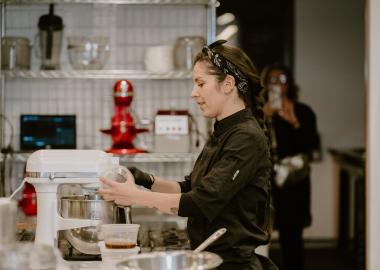
Catalan companies show the commercial potential of Christmas sweets in the US market
Prodeca and the Catalan Government Delegation to the United States held two cooking workshops in New York and Washington led by chef Úrsula XVII. 15 Catalan companies took part, presenting more than 50 product lines to the audience of retai