


Growth of the broth market in South Korea
Broth-based dishes are indispensable in Korean cuisine, remaining in demand even in summer, and are eaten all year round in Korea. With the rise in single-person households and inflation, eating at home has become a trend in South Korea. Thanks to this trend, the market for broth products has grown in recent years.
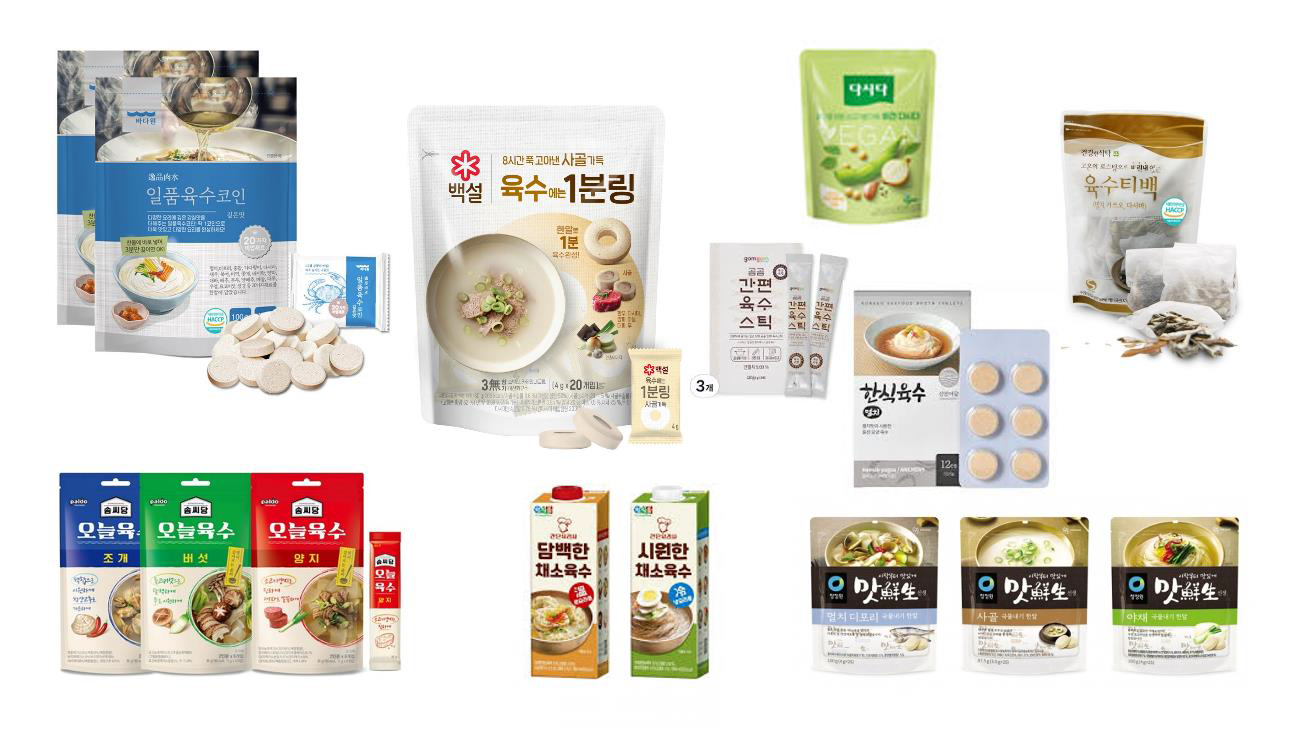
Growth of the broth market in South Korea
Broth-based dishes are essential when talking about South Korean cuisine. They are classic Korean dishes and comfort food for Koreans. Demand for broth dishes does rise in winter, when temperatures are low, but unlike in Spain it holds up even in summer, and it is a type of cooking eaten all year round in Korea. The growth of the broth market in Korea can be explained by the expansion of the ready and pre-cooked meals market (HMR, home meal replacement).
In Korea, where home cooking rather than eating out has become a trend because of the rise in single-person households and inflation, the Korean market for easy-to-cook ready and pre-cooked meals (HMR, home meal replacement) is growing rapidly. Korea's ready meals market more than doubled, from around €2,135 million (KRW 3,200 billion) in 2018 to around €4,671 million (KRW 7,000 billion) in 2023.
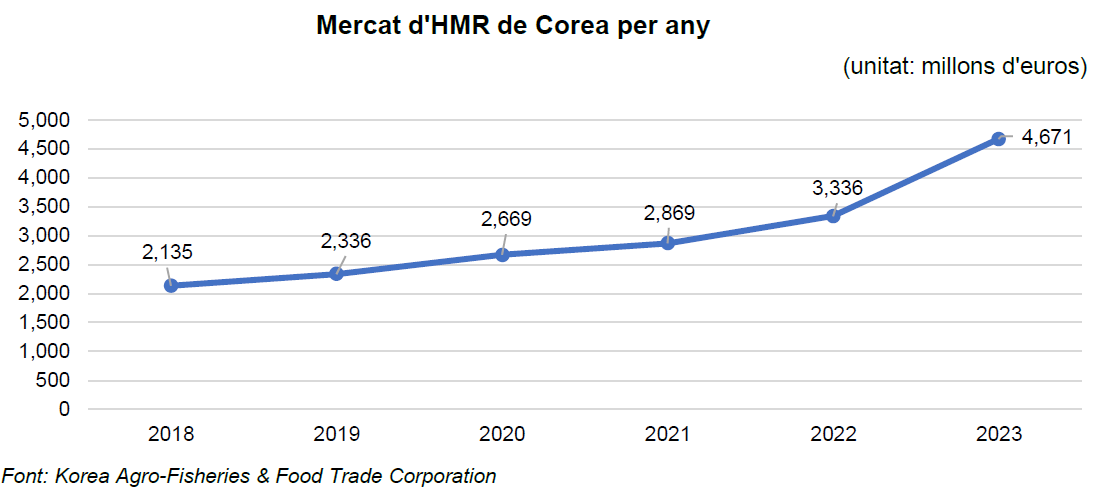
According to an analysis of customer consumption data from Homeplus, one of South Korea's three main hypermarkets, growth in ready meals (HMR) was notable. Among these, the growth of the ready-made broth market stands out. Since Korean consumers prefer "convenient" cooking that can be prepared quickly and easily, the growth of the ready-made broth market is unsurprising: making broth takes a long time, which is difficult for people today who spend long hours away at work. Currently, Korea's broth market is worth approximately €418 million (KRW 627 billion).
In particular, with the growth of product groups that significantly cut the time and effort of preparing food, sales of easy-to-make broth products, typified by broth tablets (coin broths), rose by more than 300% compared with the previous year. By age group, growth was even from customers in their 20s and 30s through to those in their 50s and 60s, and it is particularly notable that among customers in their 50s and 60s, more bought broth tablets than bought the ingredients to make broth, such as anchovies. According to the industry, South Korea's market for easy-to-make broth products grew from around €100 million in 2019 to around €150 million in 2021 (from KRW 150 billion to KRW 230 billion), and is currently estimated at around €190 million (KRW 300 billion).
Trends and characteristics of broth products in South Korea
It currently the Korean market offers a wide range of broth product formats. Seeing the broth market grow, the largest producers and distributors have also decided to invest in innovative products that move beyond the traditional presentation of broth products, such as pouches or carton packs. More varied formats are being introduced, such as frozen, tea-bag style and broth tablets.
The characteristic of frozen broth is that it can preserve the raw material's original flavour and texture better than ambient-temperature products. According to the Korea Agro-Fisheries & Food Trade Corporation, last year's frozen HMR broth sales amounted to KRW 32.3 billion, an increase of around 23% on the previous year. Although the ambient broth market is larger, frozen product sales are expected to grow rapidly as leading food companies such as Daesang and CJ CheilJedang focus on strengthening their frozen ranges. In frozen broth products, Daesang's Chungjungwon brand holds the largest market share, with CJ CheilJedang close behind.
Another innovation in product presentation is broth in tea-bag form, individually packaged and simply steeped in hot water to produce an instant broth that keeps all its flavour, quickly and hygienically, in any situation. The new tea-bag products are made from organic, easily biodegradable materials such as corn starch and other locally produced materials, aiming to be healthy and as environmentally friendly as possible.
Last but not least in this trend, coin-shaped broth tablets are being introduced, known as 'coin broth' in South Korea because of their shape. As well as being easy to store for long periods, they are also easy to carry away from home, on trips and camping. More than 100 broth tablet products are currently sold on the Korean market.
CJ CheilJedang, Korea's number one food company with more than 40% market share, went further and launched a ring-shaped broth tablet product in November 2023. Unlike the standard broth tablet, this one is ring-shaped with a hole in the middle and dissolves in boiling water in just one minute. CJ CheilJedang's manager said that, for this reason, it can be used not only in various broth and soup dishes but also in stir-fries with relatively short cooking times, and it is being well received by consumers. Broth products without synthetic additives and vegan broths are also appearing.
Adapting to Korean consumers' preferences and tastes is key, in both format and product characteristics, to introduce Catalan broths to the Korean market successfully. A broth with an authentic Catalan or Spanish flavour, or a vegan or organic one, given the growing interest in healthy cooking in South Korea, could be well received by health-conscious consumers.
If you would like to know about other commercial activities PRODECA runs in South Korea, you can write to Maria Pla at mariapla@gencat.cat.

12.17.20
Prodeca brings together Catalan food companies with importers from Korea and Taiwan
Prodeca has organized the first Online B2B Focus On Korea & Taiwan, two key markets for the Catalan agri-food sector. A dozen Catalan food and beverage companies have partnered with Korean and Taiwanese importers.
10.13.22
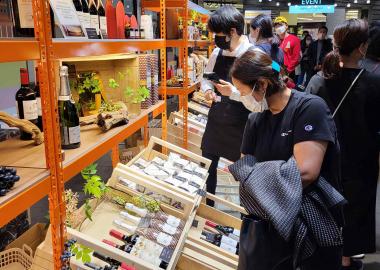
Catalan gourmet produce shines on the shelves of South Korea's leading supermarket
From 7 to 13 October, PRODECA ran a point-of-sale promotion at the Hyundai Department Store supermarket, part of the Hyundai Group. For a week, more than a hundred gourmet products were promoted in South Korea's largest supermarket.