


Omotenashi and its impact on Japanese business culture


10.08.24
Everything you need to know to export agri-food products to Japan
A course offering a complete overview of the legal, cultural and logistical requirements for successfully starting and sustaining business in Japan, an advanced and demanding market with high potential for Catalan agri-food products.

03.11.25
FOODEX JAPAN 2025
PRODECA is organising the group participation of companies at FOODEX JAPAN 2025, Japan's most important international food and beverage trade fair and one of the leading events in the Asia-Pacific region, now in its 50th edition.
Omotenashi is a Japanese term for a comprehensive philosophy of hospitality and attention to detail. It has deep roots in Japanese culture, dating back to the Heian era (794-1185) and the tea ceremony (16th century).omotenashi is not only about offering good service or a good product, but about anticipating the guest's needs and exceeding them, expecting nothing in return. Every interaction with the guest and every product is meticulously designed to provide the best possible experience.
Practical applications of omotenashi in business
In Japan, the culture of omotenashi is applied in many everyday situations, and in business relationships the customer is treated as a guest would be.
In retail shops, staff assist customers proactively and courteously from the moment they enter the shop until they leave. This approach includes meticulously wrapping products, protecting them from damage and accompanying the customer to the door with a respectful farewell. Even on rainy days, products are wrapped in plastic to keep them dry, exemplifying the attention to detail ofomotenashi.
When Japanese customers buy a product, they expect perfect packaging, taken to lengths we would consider excessive. Individually wrapping each unit is standard practice, which in Japan ensures convenience, hygiene and impeccable presentation. This detail is crucial for products used as gifts.
In restaurants,omotenashi it is reflected in personalising the customer's experience. The number of waiting staff relative to the restaurant's size is far higher than in other countries, and they all take care to present each dish in the greatest detail and are always ready to attend to the customer, sometimes to the point of seeming excessive.
Strategies for Catalan food companies in the Japanese market
For Catalan food companies wishing to enter the Japanese market, it is essential to understand and adapt to the culture of omotenashi, as it can make the difference to a business's success. Here are some key aspects to consider:
- Packaging and labelling. Make sure bottles are labelled according to the importer's specifications, perfectly and uniformly applied, and that both bottles and labels are spotlessly clean. An extra touch would be to align all the bottles in the same direction.
- Quality and safety. Japan has strict food quality and safety standards, but saying something like "our products strictly comply with all regulations" comes across rather negatively, as it amounts to admitting you do only the bare minimum. Companies must ensure their products not only meet but exceed these standards. Be sure to share with your customer the new quality and safety procedures you apply.
- After-sales and ongoing contact. Staying in touch with customers after the sale is crucial. Asking about their satisfaction and showing a constant commitment to continuous improvement is part ofomotenashi.
- Handling mistakes and complaints. Handling complaints carefully, giving a written explanation of why something happened and setting out the measures to be put in place so the mistake is not repeated, as well as apologising as many times as necessary, is also part of this culture. Handling mistakes properly can do more to win a customer's trust than efforts on price or other matters, because it shows the ability to put yourself in the customer's shoes and a willingness to solve their problems.
In short, success in the Japanese market requires far more than simply offering high-quality products; it also means adopting a philosophy of service and customer care. The omotenashi approach to our customers can make a significant difference to business success in Japan.
If you would like to know about other commercial activities we run in Japan, you can write to Maria Pla at mariapla@gencat.cat.

11.24.23
Japan tastes (and buys!) Catalan products
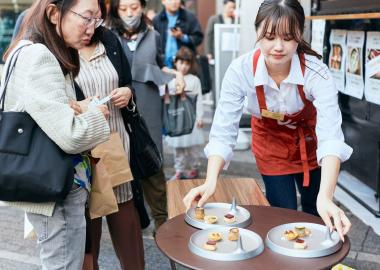
The Catalan Food Street Show organised by PRODECA in central Tokyo this week was a success, drawing more than 3,000 visitors. The food showcase featured a tasting area run by Catalan chef Josep Barahona, live music and two sales points with

03.15.24
Catalan food and cuisine gain ground in Japan
Following the success of the first edition, this weekend sees the 2nd Catalan Food Street Show, a showcase of Catalan food in central Tokyo where more than 3,000 Japanese consumers are expected to taste and buy over a hundred Catalan produc