


Convenience stores in South Korea
10.17.23
I want to export products to South Korea. Where do I start?
The Korean food and beverage sector is especially interesting for Catalan companies, which are exporting there more and more: over the last 10 years exports to South Korea have grown by over 300% in value and 150% in volume.
What are convenience stores?
Convenience stores are retail outlets selling a range of everyday items. They usually open 24 hours a day, 365 days a year. They offer a wide assortment of products, such as food, drinks, tobacco, household items and even some medicines, as well as a parcel service.
Current situation
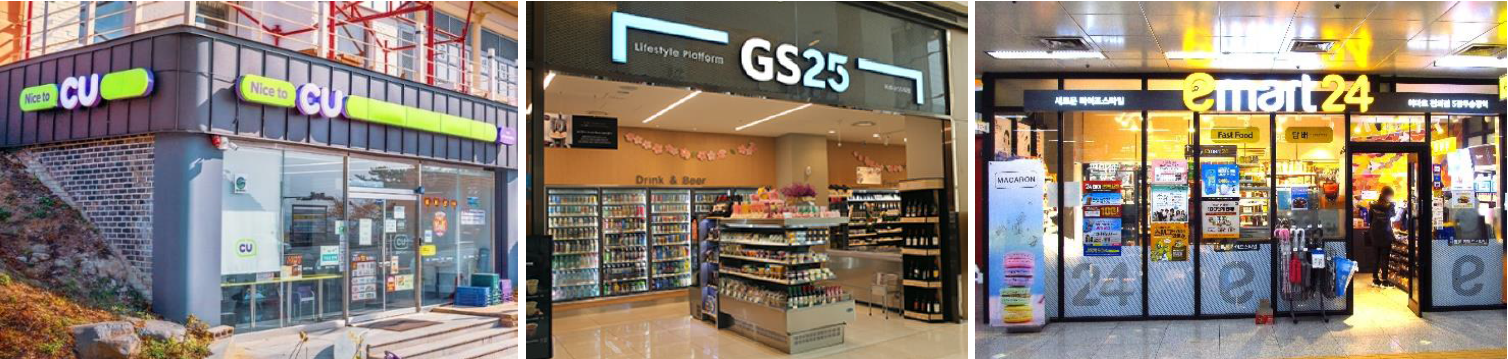
South Korea's Ministry of Trade, Industry and Energy announced that, for the first time ever, in 2021 the sales of the three main convenience store chains (CU, GS25 and 7-Eleven) overtook those of the three main hypermarkets (E-Mart, Homeplus and Lotte Mart). There are around ten convenience store brands in Korea, both large and small, including major names such as CU, GS25, 7-Eleven, Emart24 and Ministop. As of February 2022 there were some 42,000 convenience stores operating nationwide, and each brand is actively expanding its network to increase market share.
Convenience store chains in South Korea
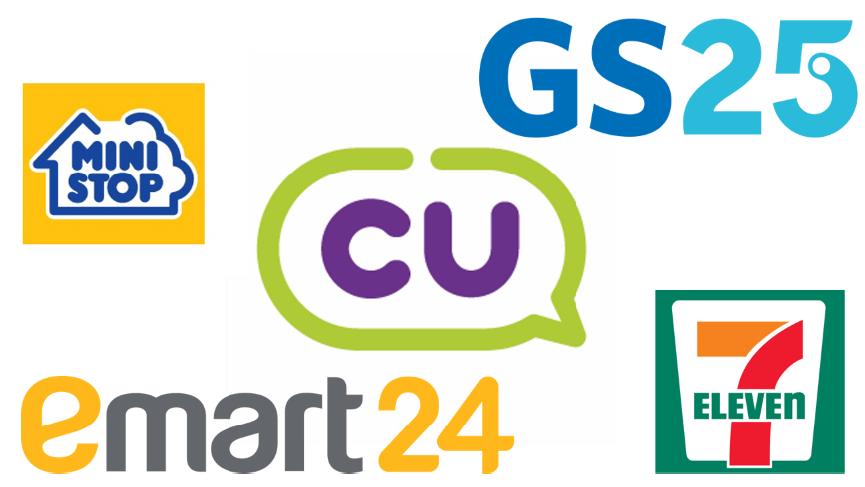
In South Korea, most convenience stores belong to chains, and there are five main ones:
- CU: a subsidiary of the BGF Group, which specialises in distribution.
- GS25: a subsidiary of the GS Group conglomerate, which split from the LG Group in 2005.
- 7-Eleven: a Japanese company, but in Korea it is operated by the Lotte Group conglomerate, which also has department stores and hypermarkets.
- Emart24: a subsidiary of the Shinsegae Group conglomerate, which also has department stores and hypermarkets.
- Ministop: acquired by the Lotte Group in January 2022 and in the process of being merged with 7-Eleven.
Market share in South Korea
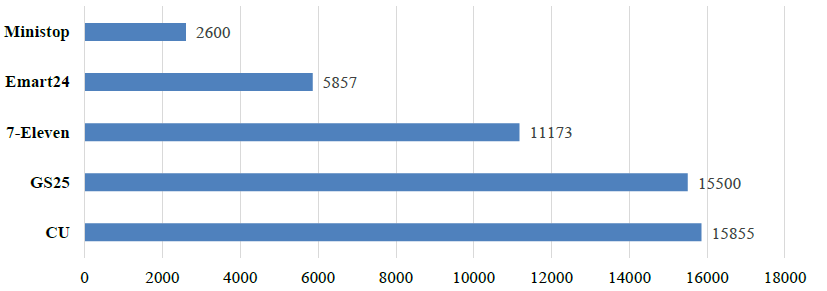
Among South Korea's five main convenience store chains, CU and GS25 compete for first and second place. In 2021 CU led with 355 more stores than GS25, while GS25 led on sales with KRW 4,301 billion (approximately €3,198 million). However, since 7-Eleven, the third largest, acquired Ministop, the fifth largest, in early 2022, the convenience store industry is set to change.
Market share by sales:
| 2017 | 2018 | 2019 | 2020 | 2021 | |
| CU | 55.849 (-41.531) | 57.759 (-42.952) | 59.461 (-44.440) | 61.687 (-45.873) | 67.812 (-50.427) |
| GS25 | 62.780 (-46.685) | 65.510 (-48.716) | 68.564 (-50.987) | 69.715 (-51.843) | 72.113 (-53.626) |
| 7-Eleven | 38.246 (-28.441) | 39.309 (-29.231) | 40.578 (-30.175) | 40.684 (-30.254) | 42.778 (-31.811) |
| Emart24 | 6.841 (-5.087) | 10.379 (-7.718) | 13.545 (-10.072) | 16.262 (-12.093) | 19.179 (-14.262) |
| unit: KRW billion (*€ million) * Exchange rate based on European Commission data for December 2021 | |||||
Market share by number of stores:
Consumers and trending categories
According to a survey, 69.5% of convenience store visitors go there to buy food products. Frequent users, who visit these stores more than four times a week, tend to be men aged 30 to 39 and single people. These users have a high rate of buying processed foods, meal kits, alcoholic drinks and ice.
53.8% of convenience store users said they mainly use GS25, followed by CU with 36.4%, 7-Eleven with 5.3%, Emart24 with 2.9% and Ministop with 1.5%. When choosing their main convenience store, 84.8% of users consider accessibility first and most often use stores near home or work. This is why the chains are competitively increasing their number of stores.
Because of the coronavirus, the "drinking at home" (Home Sul) and "eating at home" (Home Bab) trends have brought a major shift in the main convenience stores' sales. In particular, total alcoholic drinks sales at CU and GS25 rose by an average of 46.2% and 22.9% respectively compared with the previous year. By type of alcoholic drink, Western spirits such as whisky showed the highest sales growth. Wine sales in convenience stores also rose rapidly, by more than 68%.
Greater demand for fast food is another of the changes in convenience store consumption. Looking at 2021 sales by item, every item grew compared with the previous year. On average, the items with the strongest sales growth are frozen ready meals, chilled ready meals and instant rice.
If you would like to know about other commercial activities we run in South Korea, you can write to Maria Pla at mariapla@gencat.cat.
10.13.22
Catalan gourmet produce shines on the shelves of South Korea's leading supermarket
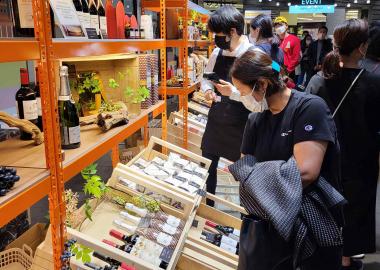
From 7 to 13 October, PRODECA ran a point-of-sale promotion at the Hyundai Department Store supermarket, part of the Hyundai Group. For a week, more than a hundred gourmet products were promoted in South Korea's largest supermarket.

01.15.24
FRISELVA, 20 years' experience exporting pork to South Korea
Catalonia exports more than 100,000 tonnes of food and drink to South Korea. The leading food product is pork, accounting for almost half the sector's total exports. We talk to FRISELVA, a meat company with twenty years' experience exportin