


10.23.19
Trump's tariffs. Working together for the Catalan agrifood sector
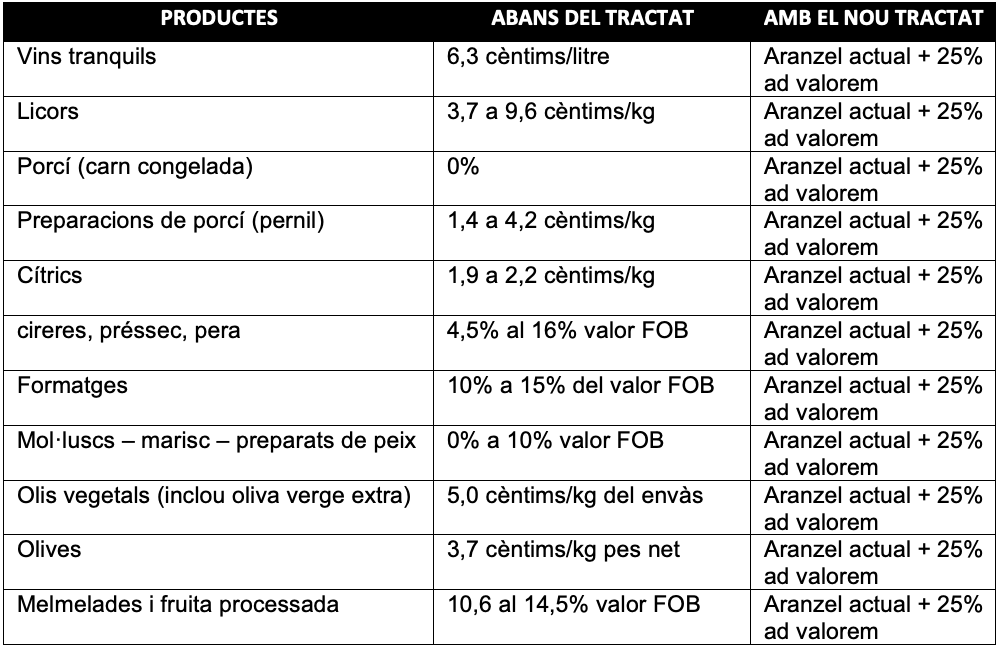
On 18 October the new tariff increases that the administration of Donald Trump will apply to European agrifood products come into force. The new duties, which mean an increase of up to 25%, will have a direct, significant economic impact on Catalan food and drink: Prodeca's Knowledge and Strategy Area has valued the tariff rise at 26 million for Catalan transactions, a figure obtained by increasing by 25% the price of the products affected by this measure (almost 1 in 3).
The sector of Fine Food, Catalonia's leading export sector to the United States, which with 125 million euros in 2018 accounts for almost half of those exports, will be the most affected. Products such as cheeses, yoghurts, butter, nuts, fruit juices and processed fruit will see their tariff costs rise by more than 25%. The other affected sector is wine and cava, which exported 85 million euros' worth to the USA in 2018. 27 of those millions correspond to still wines, affected by the tariff increase, while sparkling wines would fall outside the protectionist measure, as would Italian, Greek, Portuguese, Polish and other competing wine-growing areas.
An opportunity to highlight the sector's unity
The United States is the 8th destination market for Catalan food and drink and accounts for 3.5% of total agrifood exports, with 330 million euros exported in 2018. This selective protectionism by the Trump administration puts at risk the agrifood sector's growth in that country, where turnover has risen 60% over the last five years. What effect will it have on Catalan exports? First it must be determined whether the impact of these new duties falls on exporters, American importers or the end consumer.
A scenario of uncertainty that may also represent an opportunity for Catalan exporters. Less volatile than other driving sectors, the Catalan agrifood industry has in recent years committed to highlighting the quality of its produce. It is undeniable that in the short term the North American market may lose competitiveness, but at the same time there are alternative markets, such as the Japan, the Mercosur countries or Canada, more receptive to the possibilities offered by bilateral agreements and by trade liberalisation.
Penalised by an external conflict that has nothing to do with agrifood, it is time for the agrifood sector to work together and coordinate a common strategy of action. That means creating a body to bring together and defend the interests of the associations, organisations and players in the agrifood industry, which is entering a period of international instability. The sector's challenges are the challenges of the Catalan economy, and to face them successfully and with determination a business-level body that looks after the sector as a whole is needed.

10.23.19
Trump's tariffs. Working together for the Catalan agrifood sector
On 18 October the new tariff increases that Donald Trump's administration will apply to European agrifood products come into force.
10.23.19
Trump's tariffs. Working together for the Catalan agrifood sector
On 18 October the new tariff increases that Donald Trump's administration will apply to European agrifood products come into force.