


The cooked and cured meat products sector in Catalonia

Descarrega el document

Mapatge El sector dels embotits cuits i curats a Catalunya
The cooked and cured meat products industry in Catalonia is going through a period of **profound strategic transformation**, marked by business concentration, the drive to export and a shift in European consumer habits towards healthier, more occasional profiles.
Profile of a leading sector
The sector in Catalonia comprises 183 companies generating a turnover of 2,856 million euros and employing more than 15,500 people. The strength of this industry is clear at national level: **6 of Spain's 10 leading companies are headquartered in Catalonia, including leaders such as Casa Tarradellas, Noel Alimentaria and Argal.
The market is currently showing growing concentration, with the 10 largest companies already controlling more than 71% of the sector's estimated turnover.
Changes in consumption and product
The Western market presents significant structural challenges:
- Falling per capita consumption: 51% of Europeans have reduced their meat intake for health and sustainability reasons. Consumption is shifting from a daily food to a product for leisure or snacking occasions.
- The rise of "Health & Wellness": Strong growth in clean label products (additive-free) and high-protein products (particularly valued in Spain and among sports-oriented consumers).
- Alternative protein stalling: despite the initial interest, plant-based options in meat products are retreating in many companies because of organoleptic and price limitations.
- Halal opportunity: The market for Halal-certified meat products has gone from being a niche to becoming a key route for diversification and export.
Sales channels and private-label dominance
Large-scale retail (supermarkets and hypermarkets) already channels more than 86% of sales in Spain. In parallel, private label continues to gain ground, already accounting for 64.2% of the total volume of processed meat products in 2023. The traditional channel (independent delicatessens) continues to decline due to the lack of generational renewal, although some shops are reinventing themselves towards the gourmet segment.
Export as a growth driver
Faced with stagnant domestic consumption, Catalan companies are looking abroad with success. Exports reached 629.47 million euros in 2025.
- New markets: Although Europe is the main market, future growth is coming from Asian countries (India, South Korea) and Latin American ones (Mexico, Colombia).
- International strategies: Ambitious moves are under way, such as Noel's joint venture in China to produce sliced products directly in the destination market.
Strategic challenges and threats
- Costs and margins: Rising raw material prices directly affect margins, which stand at between 2.5% and 2.7%.
- Talent management: High absenteeism and the difficulty of finding skilled operators have become a competitive constraint that forces companies to accelerate investment in automation.
- Sustainability: Eco-design of packaging and plastic reduction are imperatives, despite the complexity of recycled material certifications.
In conclusion, the meat products sector in Catalonia retains its leadership thanks to its **capacity for innovation and market opening**, but it must face a reconfiguration of demand and growing pressure on operating costs.

01.15.24
FRISELVA, 20 years' experience exporting pork to South Korea
Catalonia exports more than 100,000 tonnes of food and drink to South Korea. The leading food product is pork, accounting for almost half the sector's total exports. We talk to FRISELVA, a meat company with twenty years' experience exportin
11.14.24
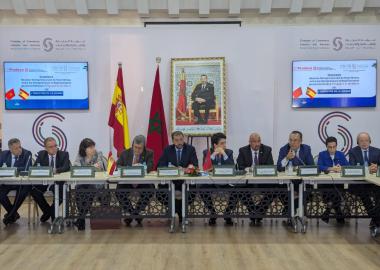
Prodeca runs a business trip to Morocco to boost trade relations between meat sector companies
Prodeca, in collaboration with Anafric, is organising a trade mission to Morocco to strengthen commercial relations between sheep and beef meat companies and Morocco, explore new avenues of collaboration and reinforce the Catalan brand's le