


The growth of the gourmet market in Uruguay
Descarrega el document

Nota informativa - El sector del Fine Food en Uruguay

08.01.24
EXPOVINOS BOGOTÁ 2024
PRODECA - DACC is organising a group participation of Catalan companies at EXPOVINOS COLOMBIA, held in Bogotá from 1 to 3 August 2024.
This report offers an analysis of the fine food industry in Uruguay, with the aim of identifying business opportunities for Catalan companies in that market. It begins with an overview of the country and a detailed profile of the agri-food sector. It then examines consumption trends and the trade balance, with particular emphasis on trade relations between Catalonia and Uruguay. It also sets out the various channels available for marketing gourmet products in Uruguay, the barriers to market entry and the industry's key players. It also includes information useful for companies preparing to pursue business opportunities, such as the country's business culture and relevant promotional activities.
Uruguay's agri-food industry remains a cornerstone of its economy, accounting for 5.80% of GDP in 2023. Technological modernisation and product diversification have allowed the country to excel in areas such as soya, rice, fruit, beef, dairy and cereals.
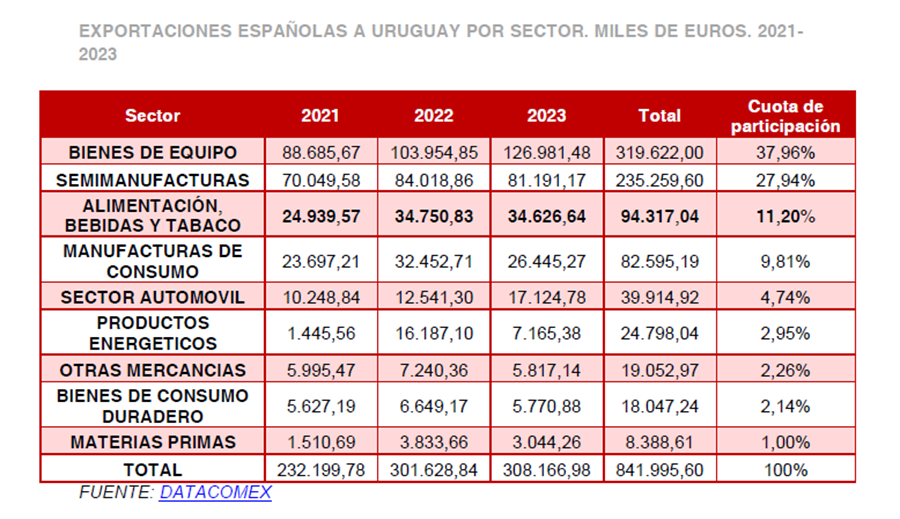
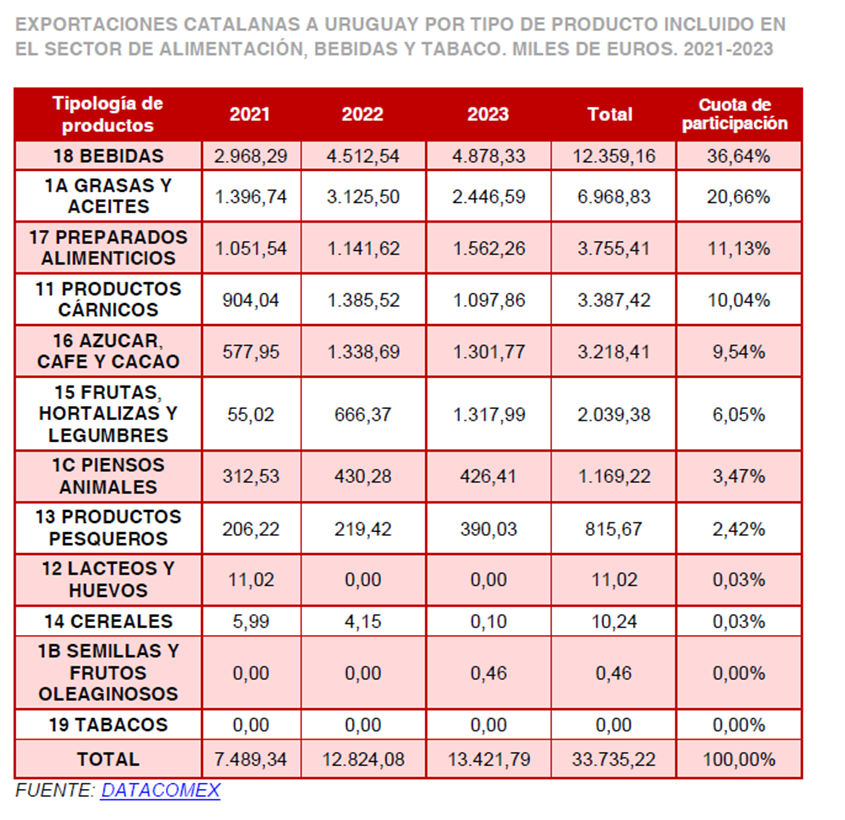
Between 2021 and 2023, Catalan exports to Uruguay grew significantly, reaching a cumulative total of €230.557 million. The food, drink and tobacco sector showed notable growth, doubling its exports over that period and accounting for 14.63% of all Catalan exports to the country. This highlights growing demand for Catalan products in Uruguay, particularly drinks, fats and oils, and food preparations.
With demand rising for high-quality food products with distinctive characteristics, Uruguay is an attractive market for exporting such products. The trend towards healthy, sustainable eating among Uruguayans opens up a range of possibilities for Catalan companies to position themselves in this niche. The market is looking for products that are not only high quality but also carry organic and sustainability certifications.
Catalan companies' ability to offer distinctive products such as extra virgin olive oils, quality wines and gourmet foods can be key to catching Uruguayan consumers' attention. Catalan companies are therefore advised to implement marketing strategies that highlight their products' quality and authenticity, and to benefit from strategic alliances with local distributors to ease their entry into the Uruguayan market.
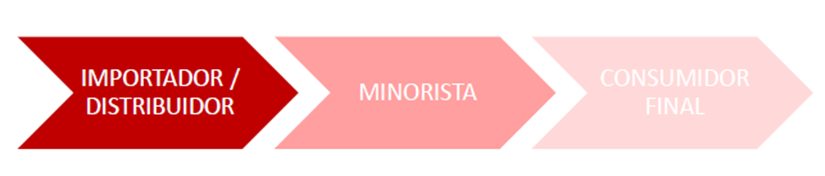
On distribution, the variety of sales channels in Uruguay is seen as an opportunity, including convenience stores, specialist shops, large retailers and the HORECA channel (hotels, restaurants and catering). This variety allows importers and retailers to tailor their offer to different consumer segments, making it easier for gourmet products to enter the market.
It is also crucial that companies understand and comply with local regulations on food imports, including obtaining health and analysis certificates and registering the importer. They must also ensure their products meet the quality and labelling standards required by the Uruguayan market.
In short, growing interest in high-quality, sustainable food products in Uruguay offers a significant opportunity for Catalan companies looking to expand their market presence. Harnessing this growing demand through effective marketing strategies and compliance with local regulations will be key to realising this promising market's potential.
Relevant information gathered in the study:
Growth of the gourmet market:
Uruguay's gourmet products sector is expanding, driven by growing consumer interest in high-quality products and distinctive flavours.
Distribution channels available:
In Uruguay, gourmet products are distributed through three main channels: convenience stores, large retailers and the HORECA channel. Convenience stores, though numerous, have lower sales volumes than large retailers such as Grupo Disco and La Tienda Inglesa, which dominate the market thanks to their size and loyalty strategies. The HORECA channel, including hotels and restaurants, is a significant opportunity for high-quality gourmet products. E-commerce has also grown notably, with 66% of Uruguayans shopping online, driven by convenience and the variety of products available.
Trade barriers:
- Tariff barriers:
Uruguay applies tariffs to imported products in sectors such as agri-food, drinks, textiles and cosmetics. The average MFN tariff is 10.1% (2022), with notable exceptions for specific products such as sugar and dairy. Effective tariffs for gourmet products such as olive oil, chocolate, olives, cured meats, cheese and wine range from 9% to 19.8%. Additional taxes must also be taken into account, such as the consular fee, customs charges and VAT advance payments, which increase import costs.
- Non-tariff barriers:
These barriers include rigorous controls and inspections by Uruguay's Technological Laboratory (LATU) and the National Viticulture Institute (INAVI), which affect competitiveness because of the costs and long response times. There are also phytosanitary barriers, such as zero tolerance for listeria in food, and problems with the protection of geographical indications, allowing confusing names such as "manchego-type cheese". Import regulations also require specific documents and registrations that must be complied with for products to enter and be sold.
Trade relations and networking:
Building relationships of trust with local partners is essential for Catalan companies seeking to enter the Uruguayan market. Networking through industry chambers, consulates and business associations can facilitate access to valuable information and business opportunities.
Promotion and visibility:
Catalan companies are strongly advised to implement effective promotional strategies to raise awareness of their gourmet products in Uruguay. Taking part in trade fairs, food events and tasting activities can increase visibility and attract consumers interested in high-quality products.
If you would like to know about other commercial activities PRODECA runs in LATAM, you can write to Rosalba Arrufat at rarrufat@gencat.cat or to Laia Villalbí at laiavillalbi@gencat.cat.


03.21.22
PRODECA organises business visits by distributors, buyers and importers from the United States and Latin America
Around Alimentaria and Barcelona Wine Week, held in Barcelona in the first week of April, PRODECA has taken the opportunity to organise several business visits to Catalonia by buyers, importers and distributors from strategic markets such a

07.03.24
Prodeca promotes the presence of Catalan wines in the Latin American market
From 1 to 4 July, Prodeca organised a series of activities under Catalan Food Brasil to add value and improve the positioning of Catalan wines in the Latin American market, introduce and explore the Catalan wine sector and give these produc