


The wine value chain in Catalonia
Descarrega el document

La cadena de valor vitivinícola a Catalunya
03.16.25
PROWEIN 2025
Prowein is the most important international trade platform for wines and spirits.
08.01.24
EXPOVINOS BOGOTÁ 2024
PRODECA - DACC is organising a group participation of Catalan companies at EXPOVINOS COLOMBIA, held in Bogotá from 1 to 3 August 2024.
09.23.24
SPARKLING WINE MASTER CLASS IN BERLIN
Prodeca, together with the Delegation of the Government of Catalonia in Germany - Ministry of Foreign Affairs, is organising a Master Class on Catalan sparkling wines in Berlin (Germany), led by sommelier Susanne Salzgeber, a highly regarded professional in the market.
The study "The wine value chain in Catalonia", produced by the Government of Catalonia through ACCIÓ, reveals that 1,384 companies work in the sector, employing almost 10,500 people. 81% of the companies are well established, with more than 10 years' experience, while half of them export. On trends, the report indicates that the Catalan wine sector is working to introduce solutions that favour sustainability throughout the process, as well as new technologies to improve crop monitoring and traceability of the products.
Catalonia's wine and cava sector generates a turnover of €3,267 million a year, equivalent to 1.2% of GDP. This is one of the key findings of the updated study. According to the report, the sector's turnover has doubled since 2016, when it was last analysed.
The report examines the health of all the companies and organisations involved in growing and tending vines; harvesting; winemaking; fermentation; storage; bottling; and the marketing of wines and cavas.
The report shows that there are 1,384 companies working in the sector (62% more than in 2016), employing 10,460 people. This is a well-established business fabric, with most companies, 81.2%, more than 10 years old. The report also notes that 95.7% of Catalan companies in this field are SMEs.
By business segment, most players in the sector are engaged in producing and making wine and cava (86.3%). These companies generate 89.5% of total turnover and employ 92.4% of the workforce. Wineries are thus the engine of the ecosystem, accounting for the largest number of companies, turnover and jobs. Companies offering cross-cutting services across the value chain make up 8.3% of the total, while distributors and marketers represent 5.4%.
Catalonia, an export powerhouse
The report highlights that almost half of the wine sector's companies (49.5%) are exporters. According to the figures in the report, in 2023 Catalonia's wine and cava exports totalled €615 million, five times the volume of imports of these products.
Over the past decade, Catalonia has accounted for 21.1% of all wine and cava sales abroad from Spain, making it the leading region both in the number of companies doing international business and in turnover generated. By country, Germany, the United States, Belgium, the United Kingdom and Japan are the main destinations for Catalan wines and cavas.
The Catalan wine sector is a benchmark in the global market. According to the International Organisation of Vine and Wine (OIV), Italy, France and Spain are the top three countries in world wine production, together accounting for more than 50% of total output.
Designations of origin, a benchmark for the sector
The report shows that Catalonia is one of the most internationally renowned regions for wine quality, growing, production and distribution. The study notes that the 11 designations of origin under the Government of Catalonia's remit account for 41.5% of all bottles of wine consumed, according to data from the Catalan Institute of Vine and Wine (INCAVI). The report also highlights that 19 Catalan wines hold the Government's qualified single-estate wine (VFC) designation, the highest quality recognition for raising awareness and prestige across that winery's value chain.
Challenges and trends in the sector
The wine ecosystem is going through a transition, with two clear lines of transformation: on the one hand, a commitment to sustainability and optimising resources for growing and making the product, and on the other, the consolidation of technology and digital tools as a way of strengthening the value chain.
In terms of sustainable production, the wine sector is working to reduce water consumption and increase circular economy processes and the regeneration and reuse of soils, with the ultimate aim of reducing the environmental footprint across the whole industrial process. This trend towards sustainability is driving a period of innovation in the sector, aimed at offering healthier products, increasing the supply of organic wines, broadening the range of flavours and also offering premium wines.
The report also highlights the introduction of technologies such as artificial intelligence, big data and robotics, among others, which carry increasing weight in the wine value chain. Deploying these tools helps achieve greater control throughout the growing, making and production process. The same applies to marketing, where offering consumers optimal traceability helps enhance prestige and increase market standing.
This article is based on the report "The wine value chain in Catalonia" produced by ACCIÓ and the INNOVI Cluster.
12.09.19
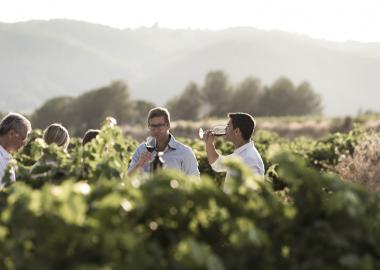
Catalan wine and cava - a symbol of the region's natural wealth
This long track record utilises the most innovative production techniques and methods.
04.26.22
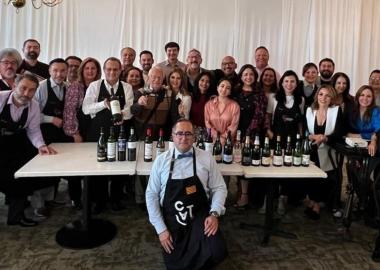
Catalan DO wines and cavas take centre stage at the Mexican sommelier school
The Escuela Mexicana de Sommeliers is running six masterclasses on Catalan wines and designations of origin with the aim of positioning them in the Mexican market. The course has the collaboration and endorsement of Prodeca, coordinated wit