


Dairy trends in Japan

10.08.24
Everything you need to know to export agri-food products to Japan
A course offering a complete overview of the legal, cultural and logistical requirements for successfully starting and sustaining business in Japan, an advanced and demanding market with high potential for Catalan agri-food products.
Japan is very fond of cow's milk. White milk, historically seen as a valuable natural source of nutrition, remains trusted and widely consumed in Japan. This extends to fermented milk (for example, yoghurt), the second most consumed dairy product. Fermented milk drinks are associated with the health benefits of lactic acid bacteria. Compared with fermented milk and milk, dairy drinks are seen as somewhat more indulgent.
Milk categories in Japan:
The fermented milk is milk (or equivalent) containing fat-free solids equal to or above the proportion found in milk, fermented with lactic acid bacteria or starters to produce a paste-like or liquid form, sometimes frozen.
The dairy-based drinks are drinks whose main ingredient is white milk or foods made from milk with non-dairy additions such as minerals, vitamins, coffee and fruit juices.
The fermented lactic drinks refer to drinks processed by fermenting milk or similar substances with lactic bacteria or yeasts, or drinks that use such fermented products as their main ingredient (excluding fermented dairy products).
Although fresh milk remains the most purchased drink, new launches in this subcategory are significantly fewer than in the yoghurt, cultured liquid milk and flavoured milk subcategories. This is because white milk is seen as a staple on Japanese consumers' shelves, keeping its distance from innovation because of its historic status.

Main dairy trends identified in Japan
1. The return of traditional flavours
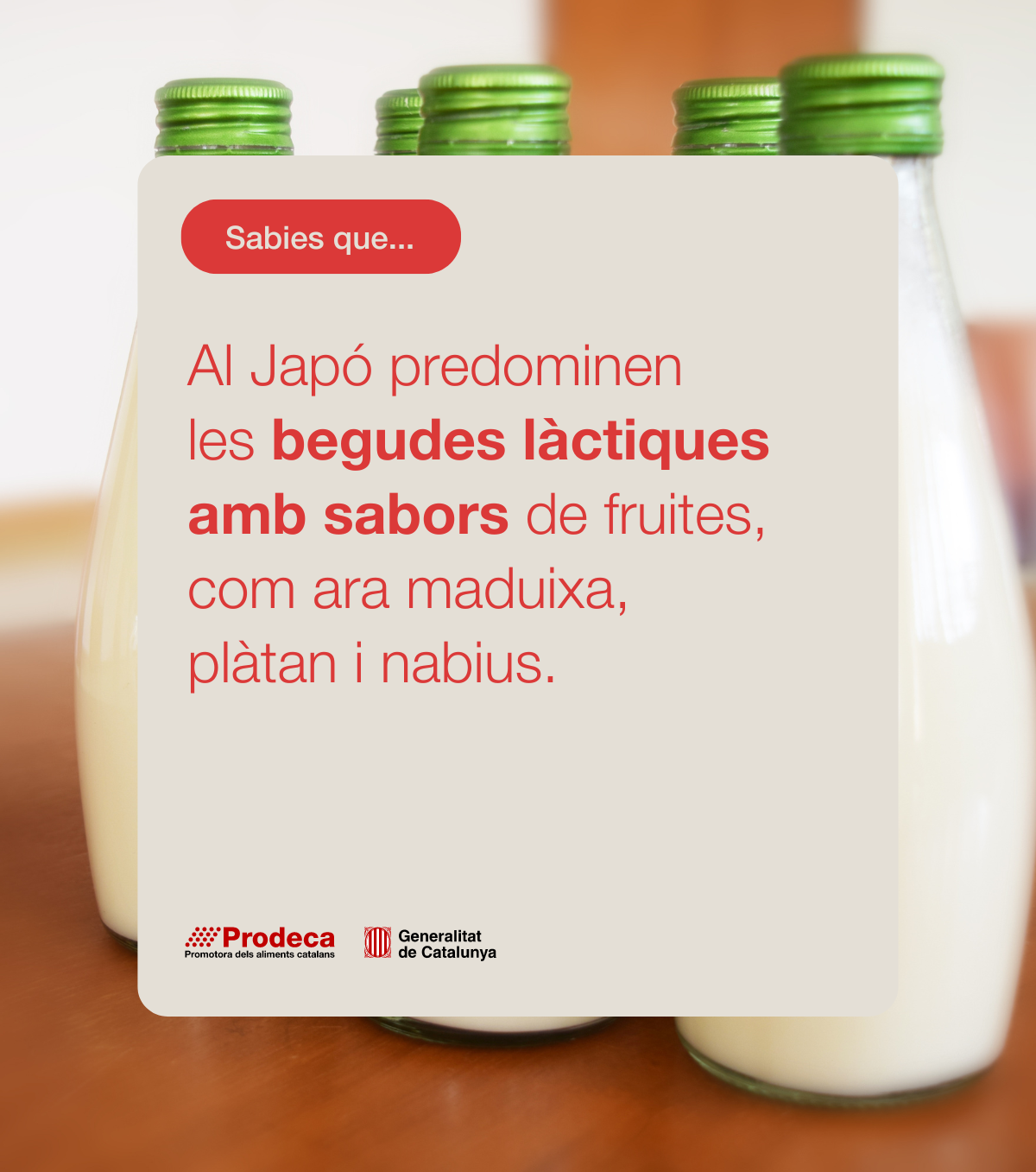
Fruit flavours predominate, such as strawberry, banana and blueberry. Unflavoured or plain options are gaining popularity, but flavoured options still dominate, including fruit flavours. Among the preferred fruits, melon and (white) peach lead and are growing strongly.
Brands are moving beyond familiar fruit flavours and exploring new fruit flavours. 14% of Japanese consumers actively look for new foods/flavours to try. 32% do so occasionally. Tapping into new flavours can captivate Japanese consumers and encourage them to try new products.
2. Going beyond flavour alone: promoting a healthy lifestyle by drawing on the nutritional image of fruit and vegetables
Brands use fruit and vegetables to promote a healthy lifestyle, drawing on their positive image and the nutrients they provide. Although vegetables and fruit are generally seen as good for health, Japanese consumers do not eat enough of them. 38% of Japanese consumers consider whether a product contributes to their fruit/vegetable intake when buying food.
3. Fortifying milk and dairy drinks with essential nutrients to strengthen their position as "healthy drinks"
Brands are adapting milk and drinks for older people in response to their specific nutrient needs. Morinaga renamed its Premil range as 'milk for body care', introducing high-protein milk with added calcium and Premil Powered by Bifidus fortified with dietary fibre, both aimed at consumers aged 40 to 60. Yukijirushi Megmilk Mainichi Honebuto Milk with MBP is high in protein, enriched with calcium and contains vitamins B6 and D, designed for the over-50s.

4. Dairy home-delivery services focused on health benefits for older people are thriving
Dairy brands' subscription services are adapting their offers to meet the health needs of older people, their main customers. Morinaga Milk Industry's home-delivery service will be rebranded in spring 2024 as 'Support Delivery' to better serve customers' growing health awareness and changing lifestyles. Its well-balanced nutritional support drink for adults is high in protein and calcium and contains 11 vitamins, dietary fibre and iron.
5. Betting on healthy drinks to add nutrients and emerging ingredients
Brands may also consider adding ingredients and elements that interest consumers in order to increase the value of their dairy drinks. For example, medium-chain triglyceride (MCT) oil, a dietary supplement, has been gradually appearing in newly launched food and drink products in Japan over the past five years. 18% of Japanese consumers would like to consume more functional food and drink made with good oils (for example, MCT oil, avocado oil).
6. Responding to demand for "smaller formats"
Demand for smaller formats has been growing over the past four years. The 900 ml format is declining in favour of the 400 ml one.
7. Powder formats
Milk and dairy drinks recently launched in Japan are predominantly in liquid form, with powder formats a rarity. There is an opportunity for companies to make the most of this area. 28% of Japanese consumers prioritise food that keeps for a long time or is easy to store when eating at home.

8. Encouraging more consumption by promoting home-cooking opportunities
In Japan, the most typical way to enjoy dairy drinks is to drink them as they are. However, there is potential for further exploration of culinary uses. 28% of milk consumers and 1% of dairy yoghurt drink consumers use them in cooking; there is room to grow in this area. To promote dairy consumption, companies are taking part in the joint government project launched in 2022 that promotes recipes using milk and dairy drinks.
9. Strengthening the link between dairy drinks and evening consumption
In Japan, white milk is mainly consumed in the morning, with 52% of consumers enjoying these products at breakfast and 12% after breakfast. By contrast, fewer people consume them in the evening: 6% at dinner, 8% after dinner and 2% just before going to bed.
Kirin Yoghurt Flavour Lactic Bacteria is a sleep drink launched with the aim of associating the evening with dairy drinks. "Moon milks", traditionally linked to night-time consumption, can be positioned as part of consumers' mental wellbeing routines. Clover Sonoma's moon milks were launched in the United States, drawing on Ayurveda to "help the body respond to physical and emotional stressors".
This article is based on the MINTEL REPORT ON TRENDS IN JAPAN prepared by the consultant Kana Shintani.

11.24.23
Japan tastes (and buys!) Catalan products
The Catalan Food Street Show organised by PRODECA in central Tokyo this week was a success, drawing more than 3,000 visitors. The food showcase featured a tasting area run by Catalan chef Josep Barahona, live music and two sales points with

03.15.24
Catalan food and cuisine gain ground in Japan
Following the success of the first edition, this weekend sees the 2nd Catalan Food Street Show, a showcase of Catalan food in central Tokyo where more than 3,000 Japanese consumers are expected to taste and buy over a hundred Catalan produc