


04.08.22
Agri-food, Catalonia's leading economic sector
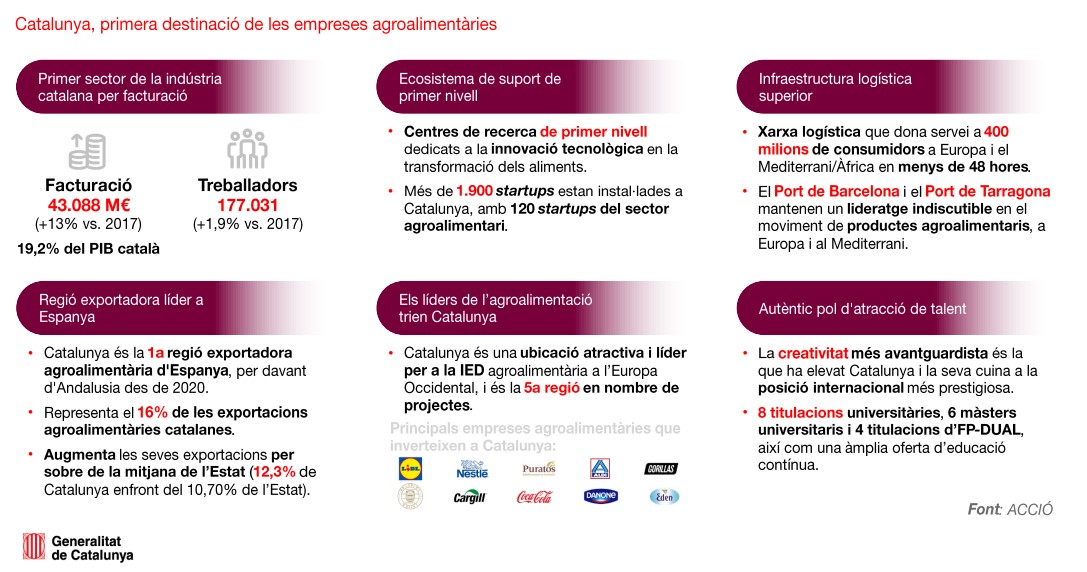
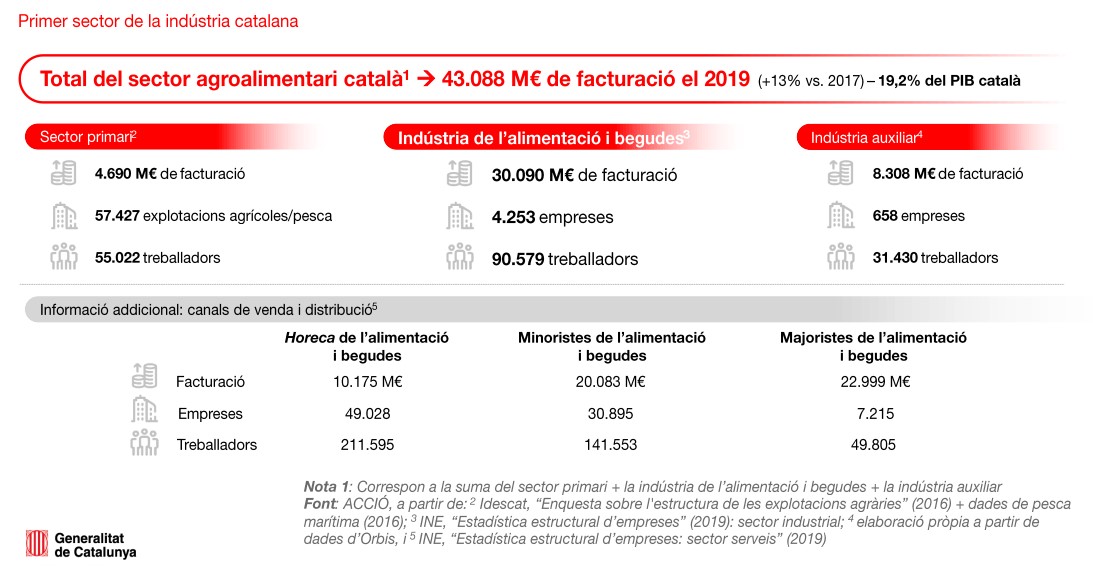
The agri-food sector accounts for 19% of GDP and is established as the most important in the Catalan economy. As a whole, the agri-food sector generates aggregate turnover of €43,088 million and employs 177,031 workers. These are some of the headline figures from the study 'The agri-food sector in Catalonia', produced by ACCIÓ and Prodeca and released to coincide with Alimentaria, analysing the sector's main figures for 2019 (the latest available data).
The agri-food sector comprises more than 57,000 primary-sector farms, livestock holdings and fishing businesses, generating €4,690 million in turnover and employing more than 55,000 people. The bulk of the sector lies in the food and drink industry, , made up of 4,253 companies accounting for more than €30,000 million in sales and employing over 90,000 people. The sector is completed by the ancillary industry directly linked to the sector, with 658 companies generating more than €8,300 million and employing over 31,000 workers.
As for the sector's main segments, those with the greatest weight in Catalan turnover are meat (31% of the total), followed by fine food (30%), vegetable oils (8%), wine, cava and alcoholic drinks (7%) and fruit and vegetables (3%). Within fine food, notable subsectors are sugar, chocolate, coffee and confectionery (9%), bakery and pastry (7%), soft drinks (4%) and dairy products (3%).
Catalonia, a leading international destination for foreign agri-food investment
Catalonia's potential in the agri-food sector generates strong foreign direct investment, with the presence in Catalonia of the market's leading global players. Between 2017 and 2021, 36 foreign investment projects brought in €595 million (16% more than in the previous five years).
Over the same 2017-2021 period, Catalonia was the fifth territory in Western Europe by number of foreign investment projects and attracted 2.5% of capital investment and 3.3% of the jobs created on the continent. In all, some thirty international companies such as Lidl, Nestlé, Coca-Cola and Danone invested in Catalonia during this period.
Beyond the richness and diversity of the agri-food sector, the study also points to logistics strength as one of the main reasons for Catalonia's international appeal in this sector, with the ports of Barcelona and Tarragona playing a key role, as well as having a first-rate support ecosystem. It highlights the importance of hosting international fairs such as Alimentaria, the presence of more than 120 agritech and foodtech startups, and having top-level agri-food and culinary research centres such as IRTA and the Alícia Foundation.
Trends and future challenges
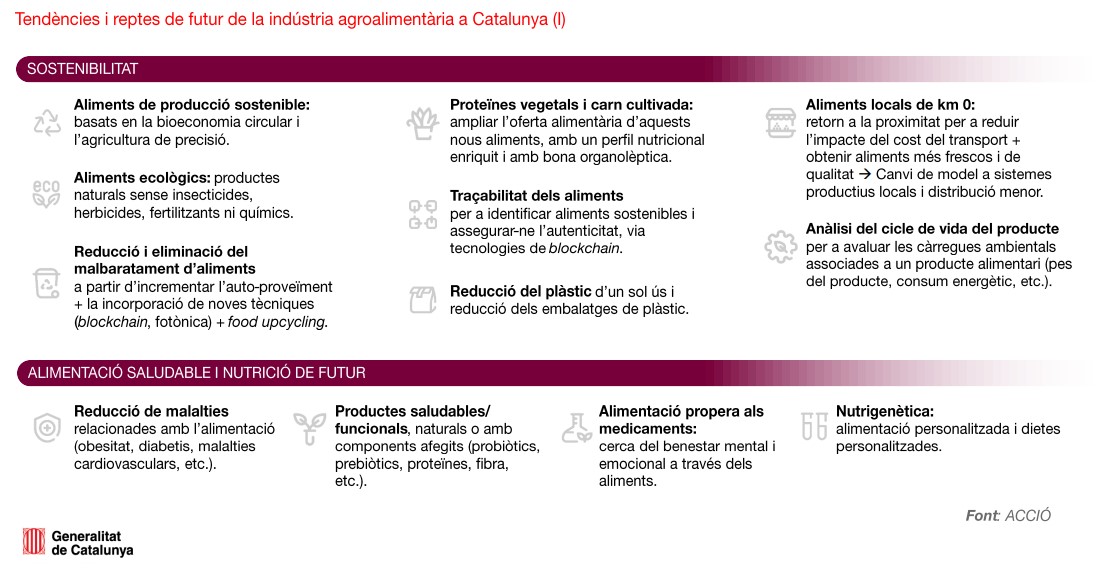
Finally, the study sets out the sector's main global trends and its most immediate future challenges. Sustainability emerges as an indispensable element in areas such as reducing and eliminating food waste, traceability, cutting plastic and the rise of plant proteins. Healthy eating and the nutrition of the future are also gaining ground through their application in reducing disease and in nutrigenetics. And agri-food technologies are expected to drive new foods and apply Industry 4.0 technologies to their production.

01.17.20
Agri-food is claimed as the first Catalan economic sector in the 1st Forum #CatalanFood
More than 350 agri-food companies and sector agents participate in the 1st Forum #CatalanFood, a sector event organized by Prodeca. Under the title "From volume to value", the day had product positioning as the thematic axis.
