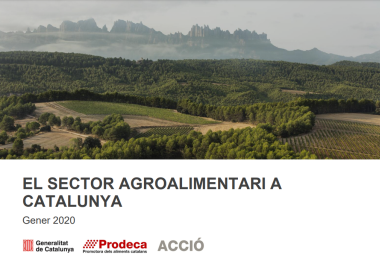
Market insights Infographics and Maps CatalanFood Trade - Any -AfricaGeographic area 2CatalunyaUnited States of AmericaGeographic area 1AmericaMiddle EastAltres - Any -Meat and deli meatsFine foodFruit and vegetableWineOlive oilFish and seafoodOrganicHalalGastronomyFood - Any -Market papersLocal competitivenessTrade barriersCertificationsCorporate cultureMarket dataInnovationSpecific marketsRegulationsExport processSustainabilityConsumer trendsDigital transformation 160 results 22.04.2020 Map of temporary measures in international trade (COVID-19) Download 22.04.2020 Summary table of temporary measures in international trade (COVID-19) Download 03.03.2020 Infographics agri-food exports from Catalonia 2019 Download 20.02.2020 Summary of agro-food exports from Catalonia 2019 Download 16.01.2020 Mapping "The agri-food sector in Catalonia" 2020 Download 03.12.2019 Wines – DO seal of guarantee A differentiating factor in Catalonia is that it has twelve Denominations of Origin (DO), which guarantees quality and diversity. It also provides the added value of guaranteed traceability and compliance with national and international quality standards. Download 03.12.2019 Map of fruit and stone varieties for export Download 03.12.2019 Business Forum Prodeca in figures Business Forum Prodeca in figures Business Forum is a business connection platform between agribusiness companies. In the midst of the digital age, Business Forum calls for direct contact between entrepreneurs and international importers to advance the development of the agri-food economy and international trade. Download 03.12.2019 Why Incoterms are important Why Incoterms are important The Incoterms 2020 version is expected to enter into force next January 1. Knowing the changes it entails is essential for exporting companies to carry out the shipments of their products with full guarantee, speed and safety. Download 03.12.2019 Basic differences between Incoterms 2010 and 2020 Brief review and comparison between Incoterms 2010 and 2020, which will be published shortly. One of the essential aspects to highlight in the new Incoterms 2020 is the transversal or systemic view. It is about visualizing the Incoterms taking into account all the departments of the company and taking into account all the logistical, administrative, regulatory and legislative needs that affect the decision to use one Incoterm or another. In short, it is about eliminating the risks and costs of any international sales operation. Download 03.12.2019 History of Incoterms Incoterms as such were created by the International Chamber of Commerce (ICC) in 1936. Since then, the international transport community has witnessed multiple changes and new editions of Incoterms, such as those of 1953, 1967 and 1976. But over the past 50 years, these revisions have taken place periodically every ten years, becoming effective at the beginning of each decade and giving rise to the Incoterms 1980, 1990, 2000 and 2010. Download 03.12.2019 Mercosur in data Last July 28 it became official: after more than 20 years of negotiation, the signing of the trade agreement between Mercosur and the European Union (EU) was presented, which will enter into force once it is ratified by each of the parliaments of the 28 countries that make up the EU and by the four Mercosur partners. Part of the importance of signing the agreement is translated into numbers: Mercosur is the 5th largest economy outside the EU, with a GDP of 2.46 trillion euros. It is a market of more than 263 million consumers, a figure that represents 3.5% of the world's population, with a GDP per capita of €9,359 and 80% of Latin America's GDP. Download Load more
03.12.2019 Wines – DO seal of guarantee A differentiating factor in Catalonia is that it has twelve Denominations of Origin (DO), which guarantees quality and diversity. It also provides the added value of guaranteed traceability and compliance with national and international quality standards. Download
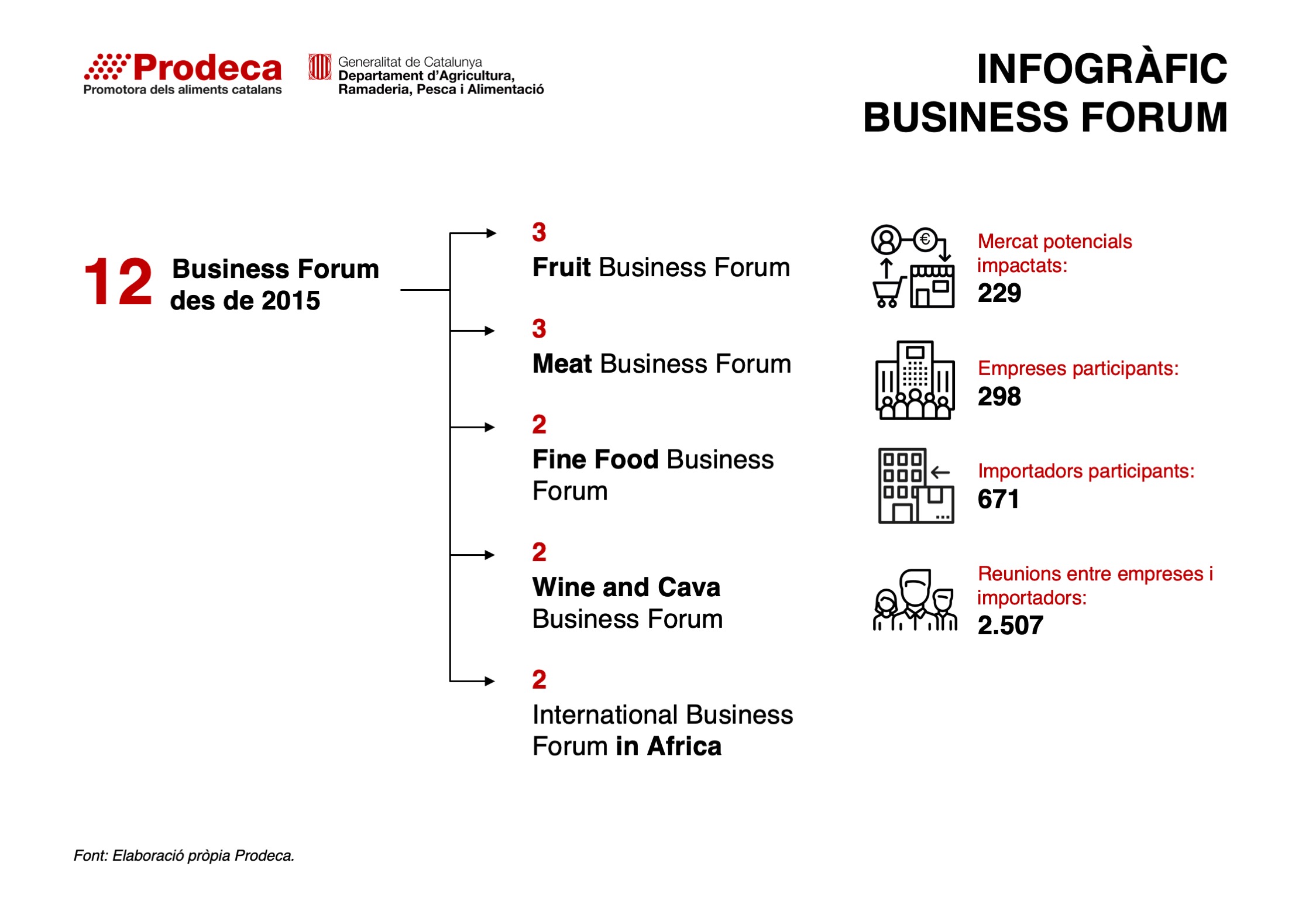
03.12.2019 Business Forum Prodeca in figures Business Forum Prodeca in figures Business Forum is a business connection platform between agribusiness companies. In the midst of the digital age, Business Forum calls for direct contact between entrepreneurs and international importers to advance the development of the agri-food economy and international trade. Download
03.12.2019 Why Incoterms are important Why Incoterms are important The Incoterms 2020 version is expected to enter into force next January 1. Knowing the changes it entails is essential for exporting companies to carry out the shipments of their products with full guarantee, speed and safety. Download
03.12.2019 Basic differences between Incoterms 2010 and 2020 Brief review and comparison between Incoterms 2010 and 2020, which will be published shortly. One of the essential aspects to highlight in the new Incoterms 2020 is the transversal or systemic view. It is about visualizing the Incoterms taking into account all the departments of the company and taking into account all the logistical, administrative, regulatory and legislative needs that affect the decision to use one Incoterm or another. In short, it is about eliminating the risks and costs of any international sales operation. Download
03.12.2019 History of Incoterms Incoterms as such were created by the International Chamber of Commerce (ICC) in 1936. Since then, the international transport community has witnessed multiple changes and new editions of Incoterms, such as those of 1953, 1967 and 1976. But over the past 50 years, these revisions have taken place periodically every ten years, becoming effective at the beginning of each decade and giving rise to the Incoterms 1980, 1990, 2000 and 2010. Download
03.12.2019 Mercosur in data Last July 28 it became official: after more than 20 years of negotiation, the signing of the trade agreement between Mercosur and the European Union (EU) was presented, which will enter into force once it is ratified by each of the parliaments of the 28 countries that make up the EU and by the four Mercosur partners. Part of the importance of signing the agreement is translated into numbers: Mercosur is the 5th largest economy outside the EU, with a GDP of 2.46 trillion euros. It is a market of more than 263 million consumers, a figure that represents 3.5% of the world's population, with a GDP per capita of €9,359 and 80% of Latin America's GDP. Download