


Business opportunities in Colombia's HORECA channel
Descarrega el document

Nota informativa - Oportunitats de negoci al canal HORECA de Colòmbia
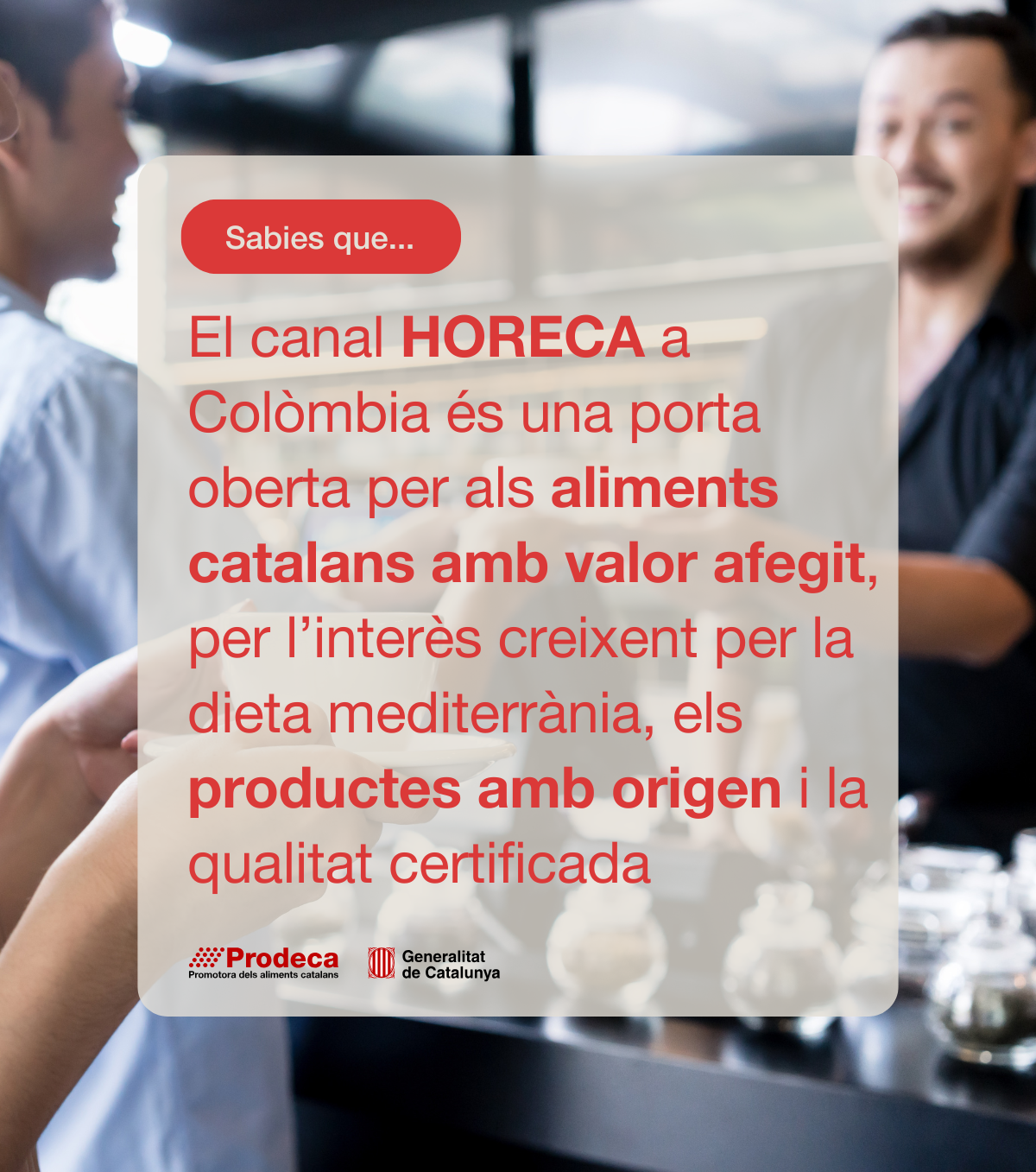
Colombia offers high potential for Catalan agri-food products in the HORECA channel (hotels, restaurants and catering), an expanding sector driven by tourism growth, the rise of international cuisine and increased purchasing power in major cities such as Bogotá, Medellín and Cartagena.
The report highlights strong interest in gourmet and high-quality products - such as olive oil, cured meats, wines and sparkling wines, as well as fine food- food among consumers in the segment premium. Despite competition from other exporting countries (Chile, Argentina, Italy), Catalan products enjoy a good reputation and have room to grow.
Current trade and import situation
Catalonia exports far more to Colombia than it imports. In 2024 the trade balance was favourable by €82.3 million, especially in extra virgin olive oil, cured meats and healthy biscuits. Even so, the Catalan presence remains modest within total Spanish exports, with a share ranging from 3% to 6% depending on the product.
Extra virgin olive oil, for example, is a clear opportunity: consumption is growing in both the HORECA channel and supermarkets premium. Catalan companies can stand out with distinctive varieties (arbequina, organic, designation of origin) and formats tailored to each income segment.
The cured meats and meats premium (such as boneless Iberian ham or cured chorizo) are present in specialist restaurants. Demand is growing but health barriers must be overcome and formats and prices adapted. In the case of wine, despite recognition of Catalan quality, the local offer is overshadowed by other Spanish designations of origin and South American producers. To compete, positioning, storytelling and a presence at fairs such as Expovinos or Alimentec are needed.
Products fine food (biscuits, truffles, jams, nuts, etc.) have greater penetration through gourmet channels and e-commerce. Catalan brands can grow in this segment if they invest in attractive formats, limited editions and promotion on digital platforms.
Key factors for market access
The regulatory and tariff framework is favourable thanks to the EU-Colombia trade agreement, which removes tariffs on most agri-food products. However, strict requirements must be met on labelling, health registration (INVIMA), certificates of origin and logistics (especially for chilled products).
Colombian HORECA customers are demanding: they value traceability, quality and the product's origin. The growth of delivery and food service platforms (such as Rappi or Uber Eats) also opens new digital distribution channels that can ease Catalan brands' entry.
Strategic recommendations
- Focus entry on high-income urban areas, where consumption of premium.
- Align with local HORECA importers and distributors to ensure efficient entry.
- Invest in digital visibility and promotional activities, especially specialist fairs, tastings and campaigns with restaurants.
- Adapt formats and messaging to the segment: healthy, gourmet, organic or traditional.
With a well-focused strategy and local collaboration, Catalan companies can establish themselves as benchmarks for quality and authenticity in Colombia's HORECA market.
If you would like to know about other commercial activities PRODECA runs in LATAM, you can write to Rosalba Arrufat at rarrufat@gencat.cat or Kamel Jalloul at kameljalloul@gencat.cat.


01.20.25
TTD.EU project's 2025 schedule confirmed for the Chinese and US markets
Prodeca announces the official schedule of promotional activities for the European project European Quality Wines: Taste The Difference (TTD.EU) in the Chinese and United States markets during 2025. These initiatives aim to boost the presen

04.18.24
Prodeca stages the first US importers' fair devoted exclusively to Catalan products
Catalan Food Show Miami brought together 28 Catalan companies already present in the US market and 500 professionals from agri-food distribution, retail and food service, along with chefs and food opinion leaders.