02.19.24
Catalonia consolidates the shift from volume to value in agri-food exports and tops €15 billion for the first time
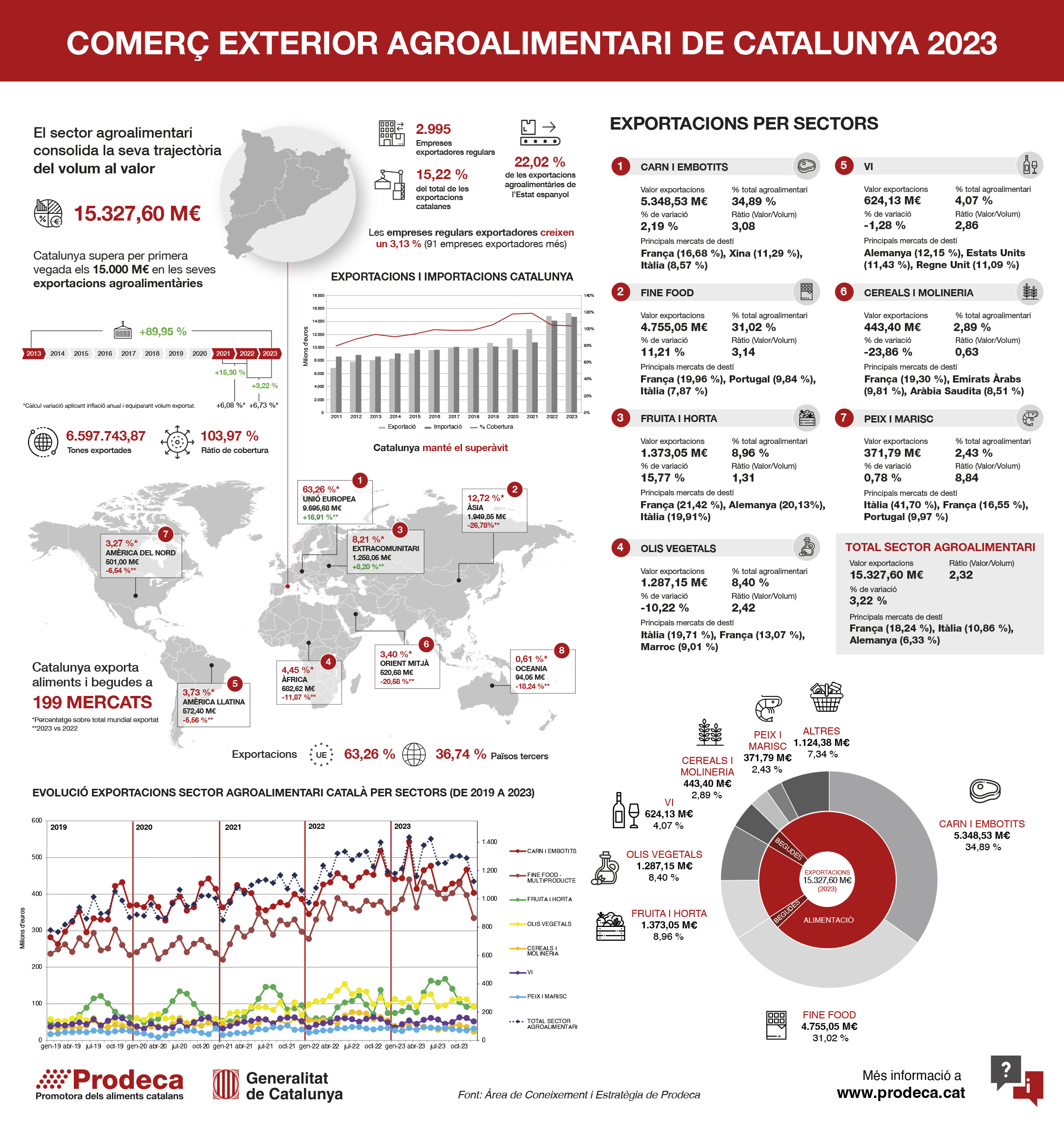
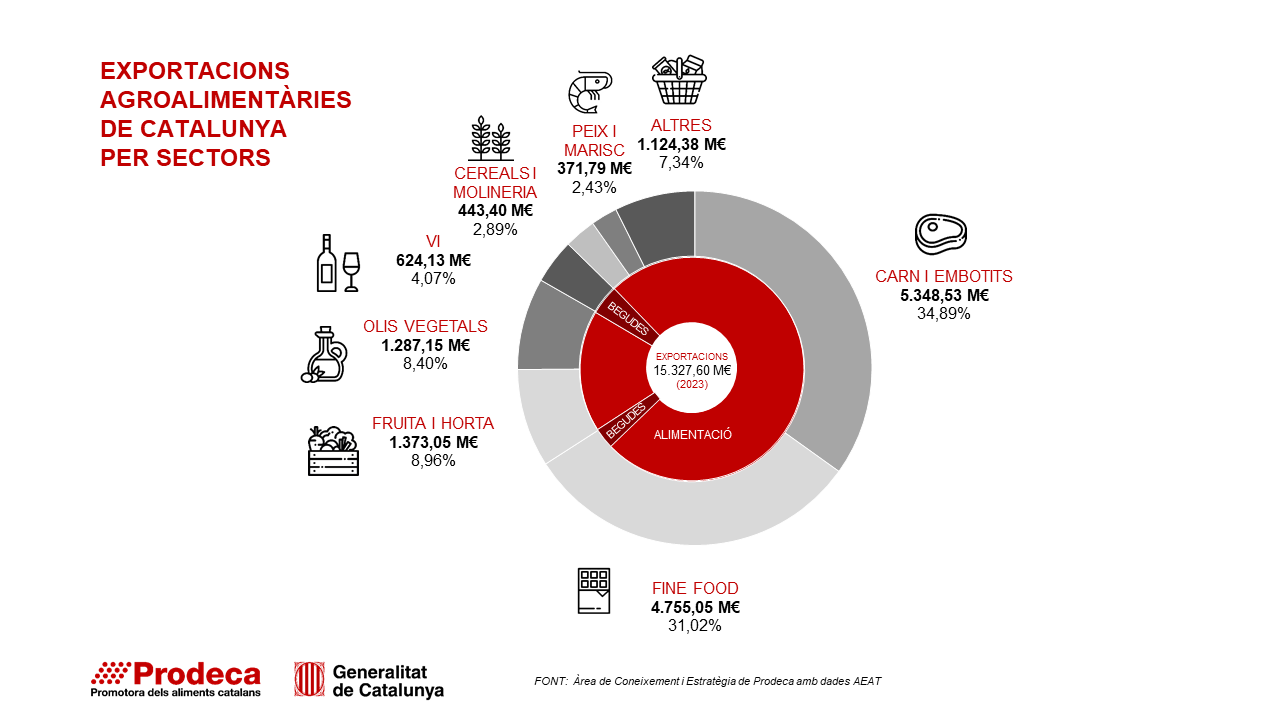
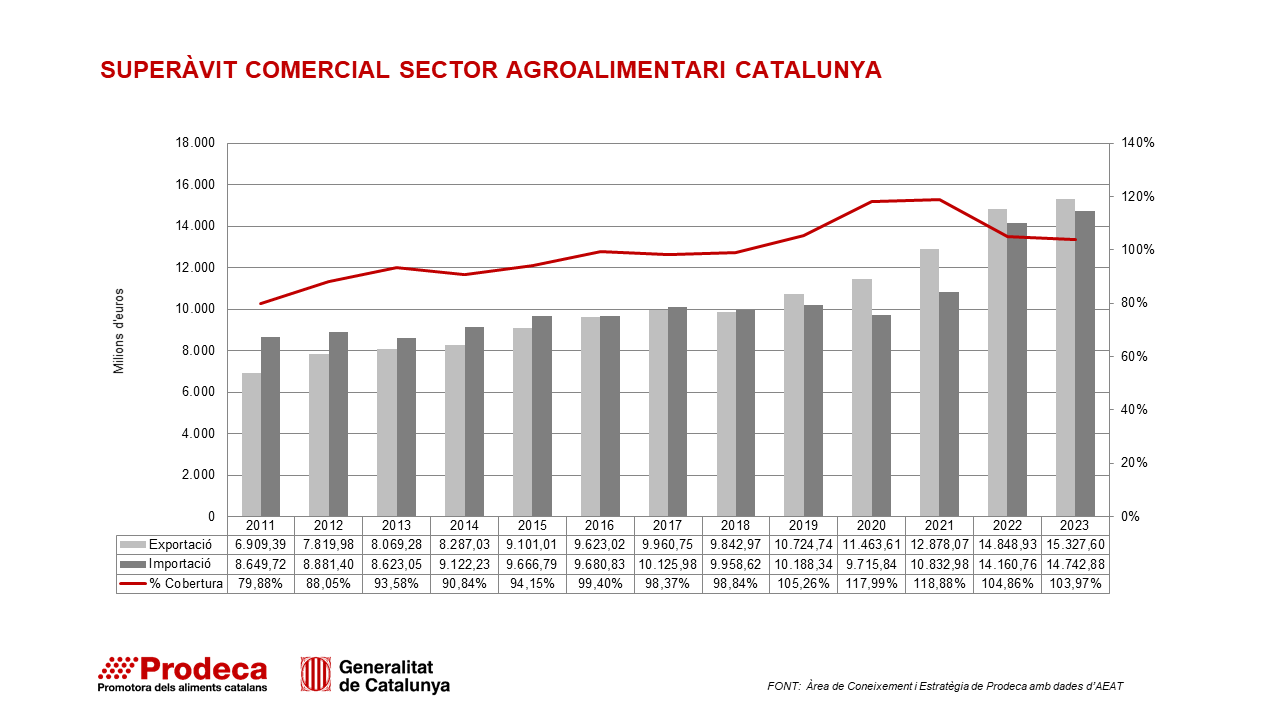
Agri-food exports set a new export record with €15,327.60 million exported, up 3.22% on 2022, and the sector remains a driver of the Catalan economy.
The latest agri-food export figures consolidate the sector's competitive trend in foreign markets through added value. Over the last 10 years, Catalan agri-food exports have grown 89.95% in value and 16.15% in volume.
Catalonia's food exports are in line with the Spanish average (-0.24%) and the EU as a whole, which fell 5.98%. Overseas sales of Catalan agri-food products in 2023 account for almost a quarter of Spain's total agri-food exports (22.02%). Catalonia is a food and drink export power ahead of Portugal, Greece, Peru, Colombia, Sweden and Japan.
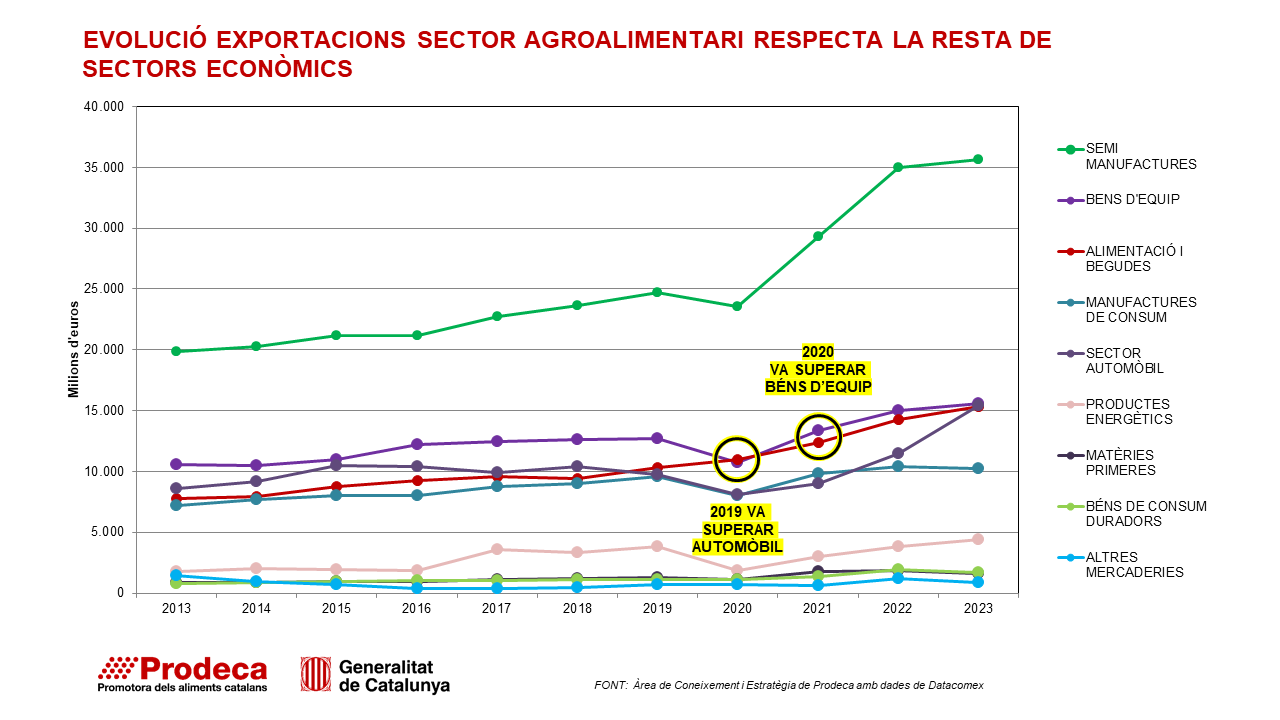
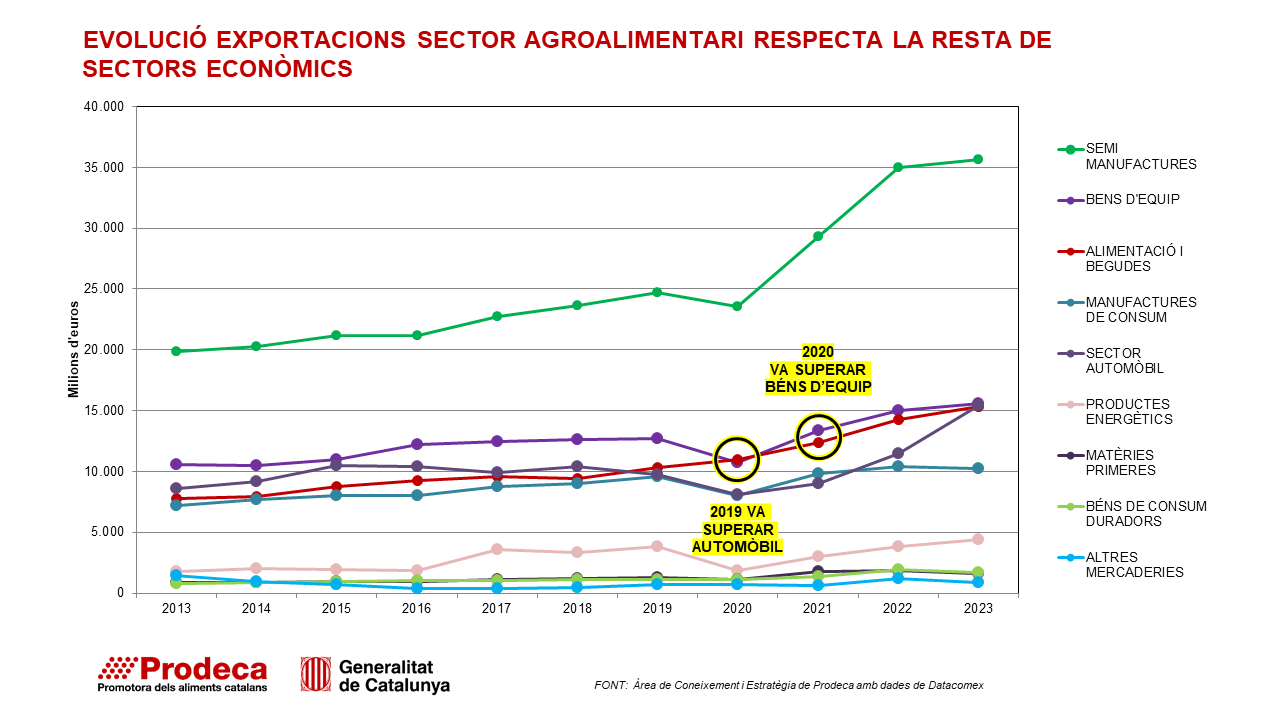
Agri-food remains Catalonia's third largest exporting economic sector, behind semi-manufactures and capital goods, on which it has been closing the gap. One in every six euros Catalonia exports comes from agri-food exports (15.22%) and they equal 5.66% of Catalan GDP.
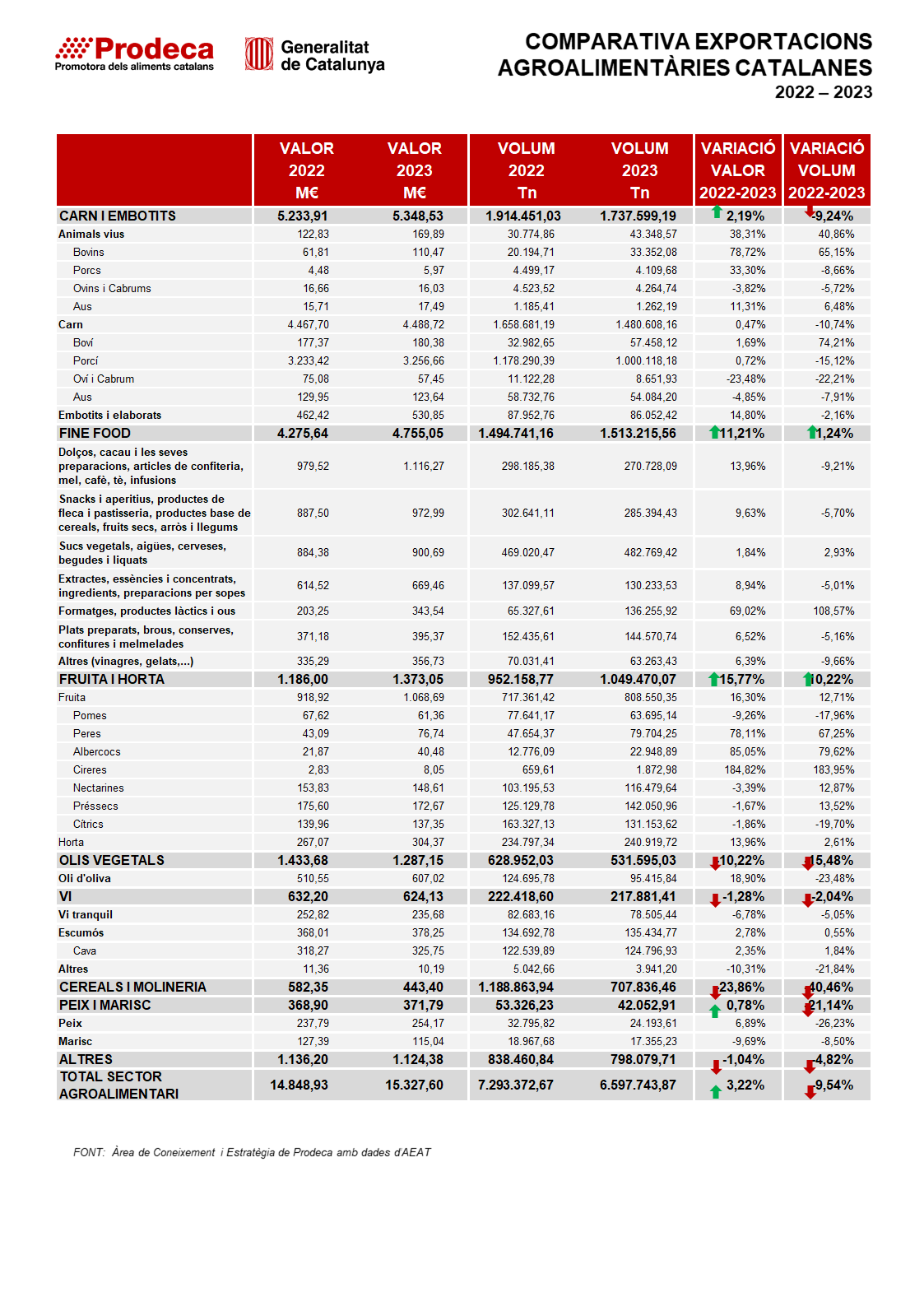
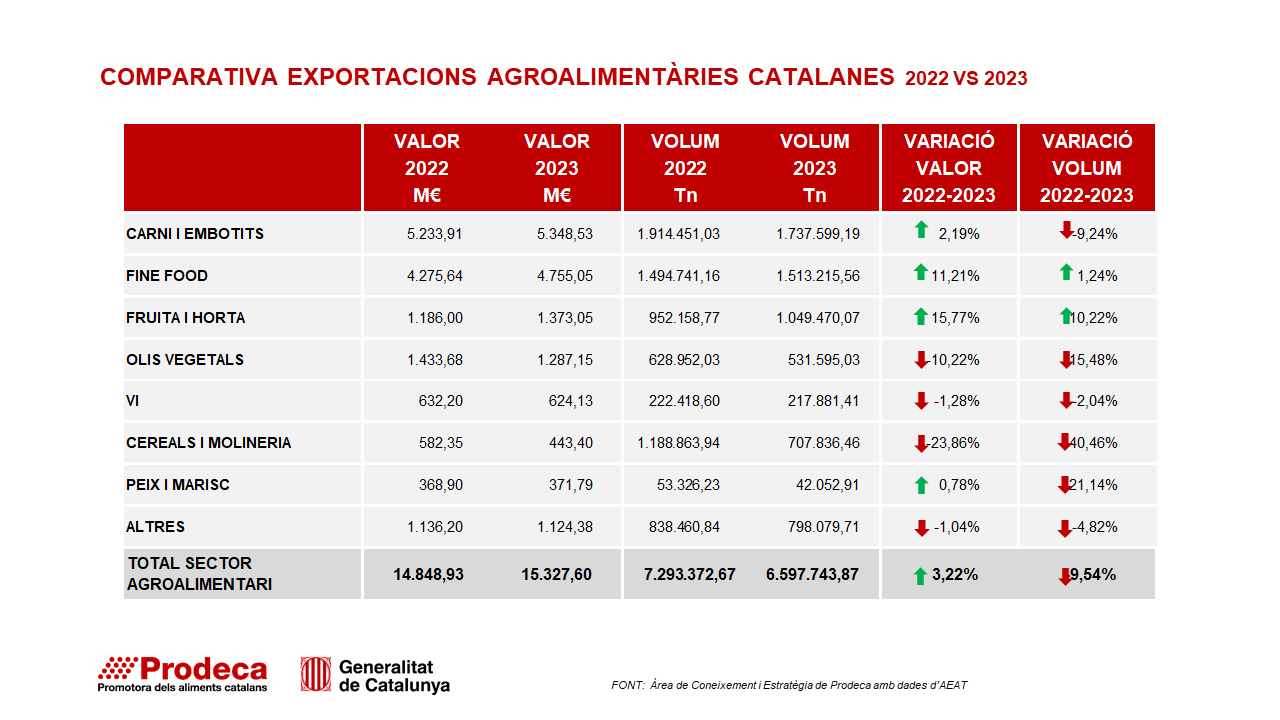
On volume, although exports fell 9.54% in 2023 on the previous year, the figure is slightly worse than the Spanish average (-8.88%) and the EU's (-6.17%). The fall is mainly due to low output in olive oil because of weather and in cereals and milling, plus lower exports of fish and meat products — which for the second year running reduced export volume while growing in value.
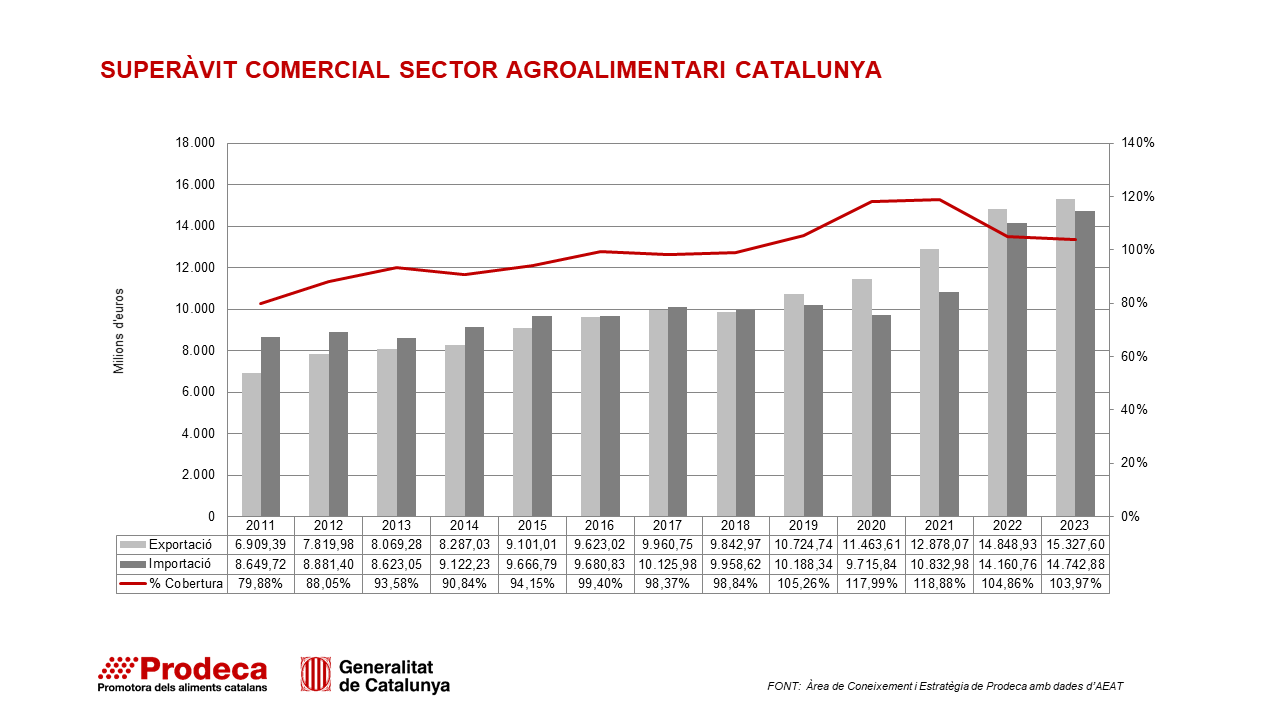
Catalonia maintains its agri-food trade surplus first achieved in 2019, with a coverage ratio of 103.97%: it exports more (€15,327.60 million) than it imports (€14,742.88 million).
Agri-food exports by subsector
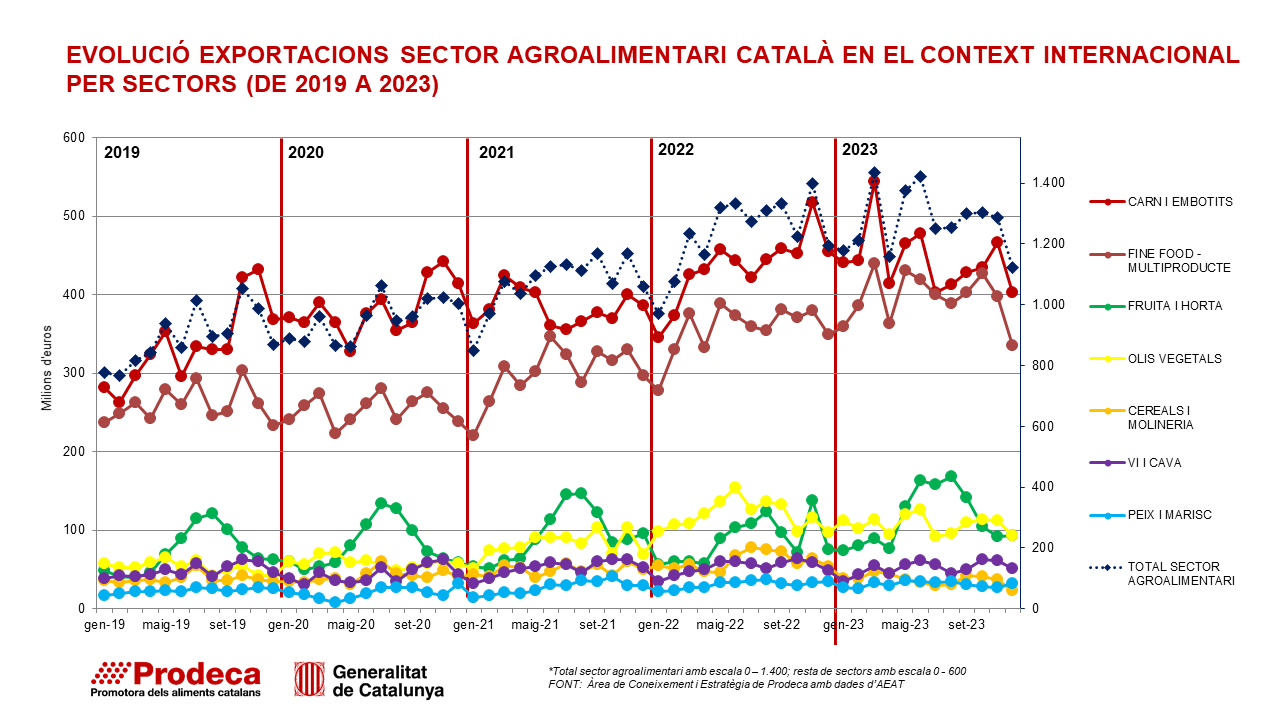
Based on the Prodeca Index, which groups various TARIC subheadings into 7 subsectors to simplify the analysis of agri-food exports, Catalonia's food subsectors are maintaining their favourable shift from volume to value. All grew in value except wine (-1.28%), vegetable oils (-10.22%) — although olive oil grew (+18.90%) — and cereals and milling (-23.86%). In 2023 there were significant value increases in fruit (+15.77%), fine food (11.21%), meat and cured meats (2.19%) and fish and seafood (0.78%).
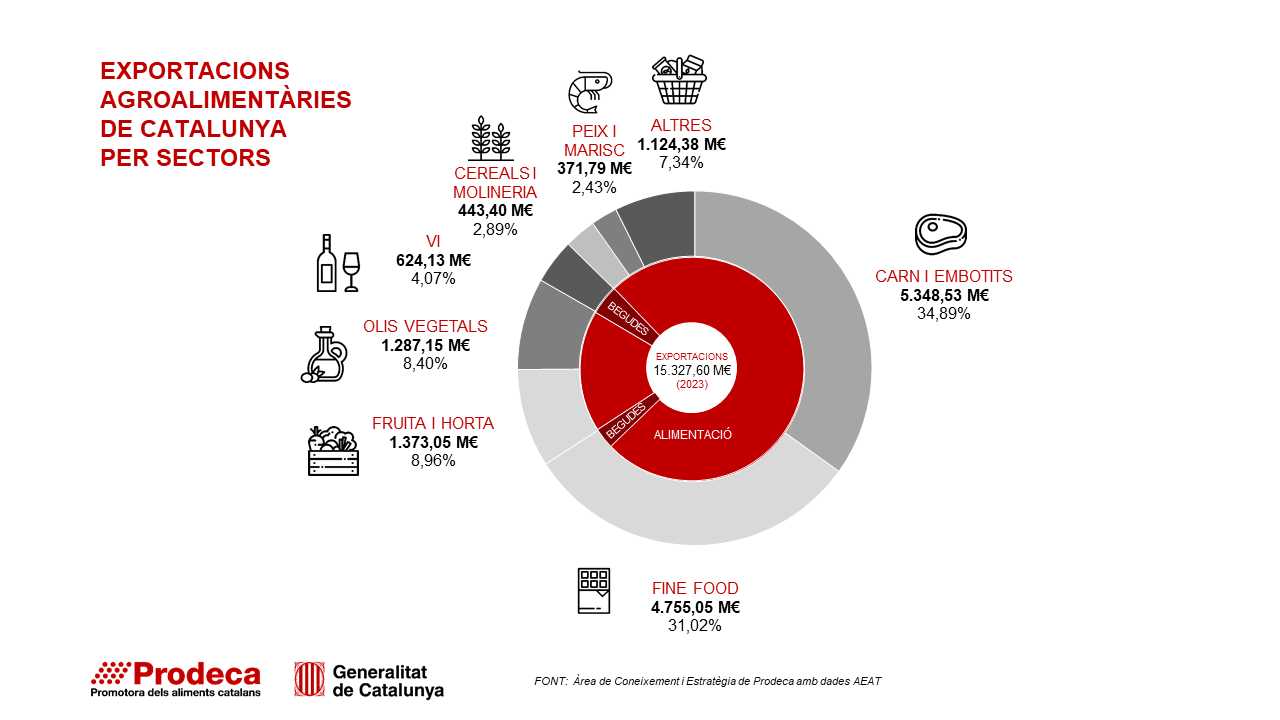
The biggest export sectors remain meat and fine food, accounting for 34.89% and 31.02% respectively. Fruit and vegetables are again the third largest export sector, ahead of vegetable oils, now fourth. Fifth is wine. Cereals and milling and fish and seafood close the ranking.
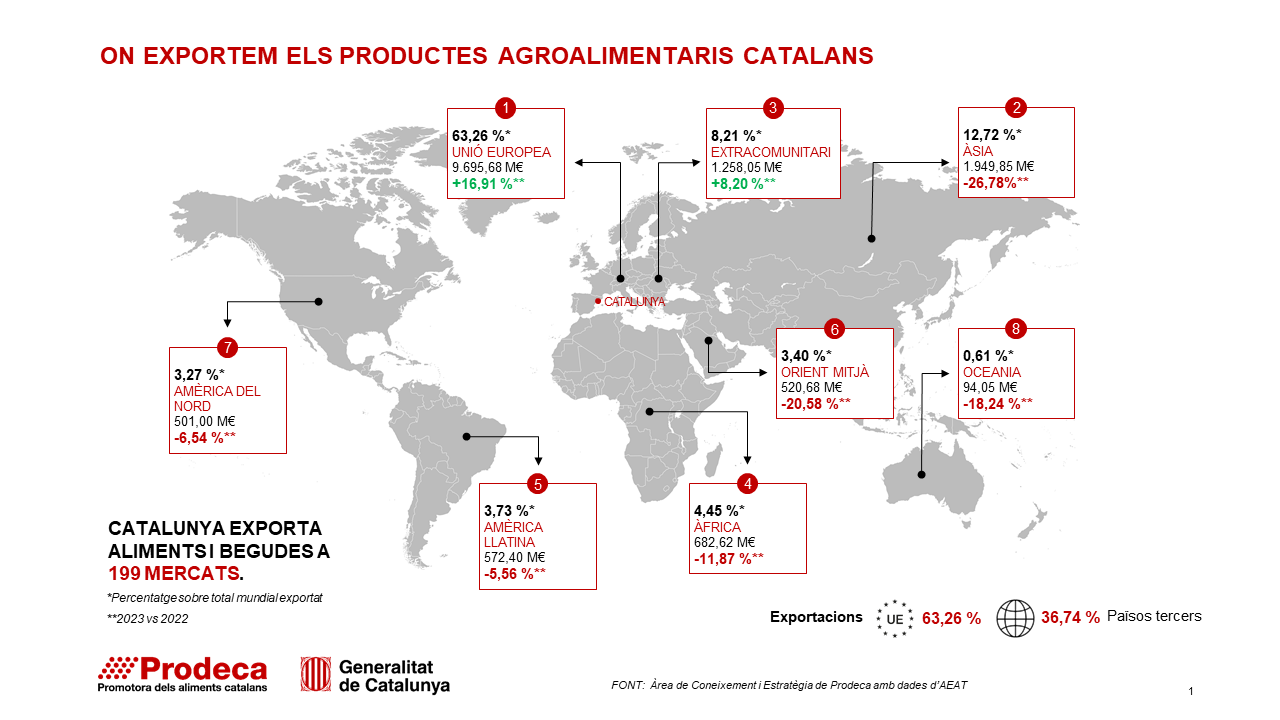
Catalonia exports food and drink to almost 200 countries
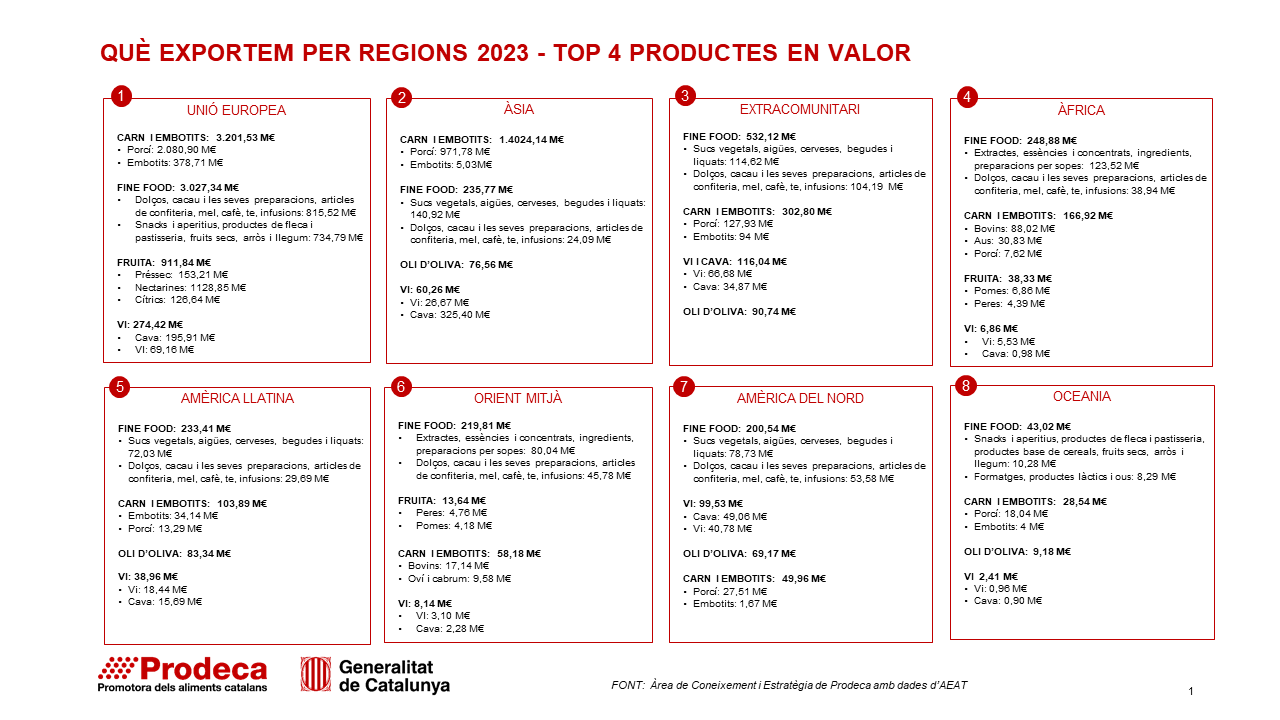
The number of destination countries remains stable (199). Notable is the considerable increase in sales to the EU on the previous year: from receiving almost half of Catalan agri-food exports (55.85%) in 2022 to almost two thirds (63.26%) in 2023, growth of 16.91%. The remaining exports (36.74%) go to third markets, which fell 14.10% overall. There were significant falls in Latin America (-5.56%), North America (-6.54%), the Middle East (-20.58%), Oceania (-18.24%), Africa (-11.87%) and Asia (-26.78%).
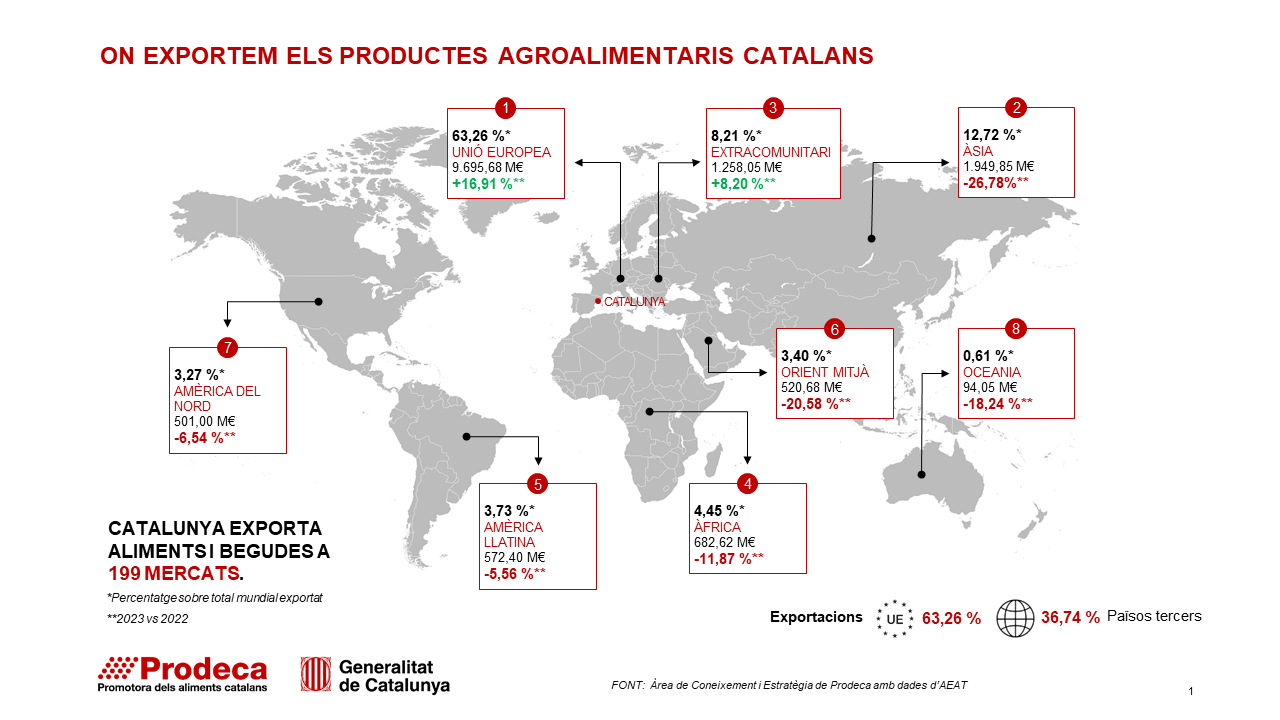
Given the instability in third markets, mainly Asian ones, the Catalan agri-food sector has chosen to increase sales in more stable, nearby markets such as Europe.
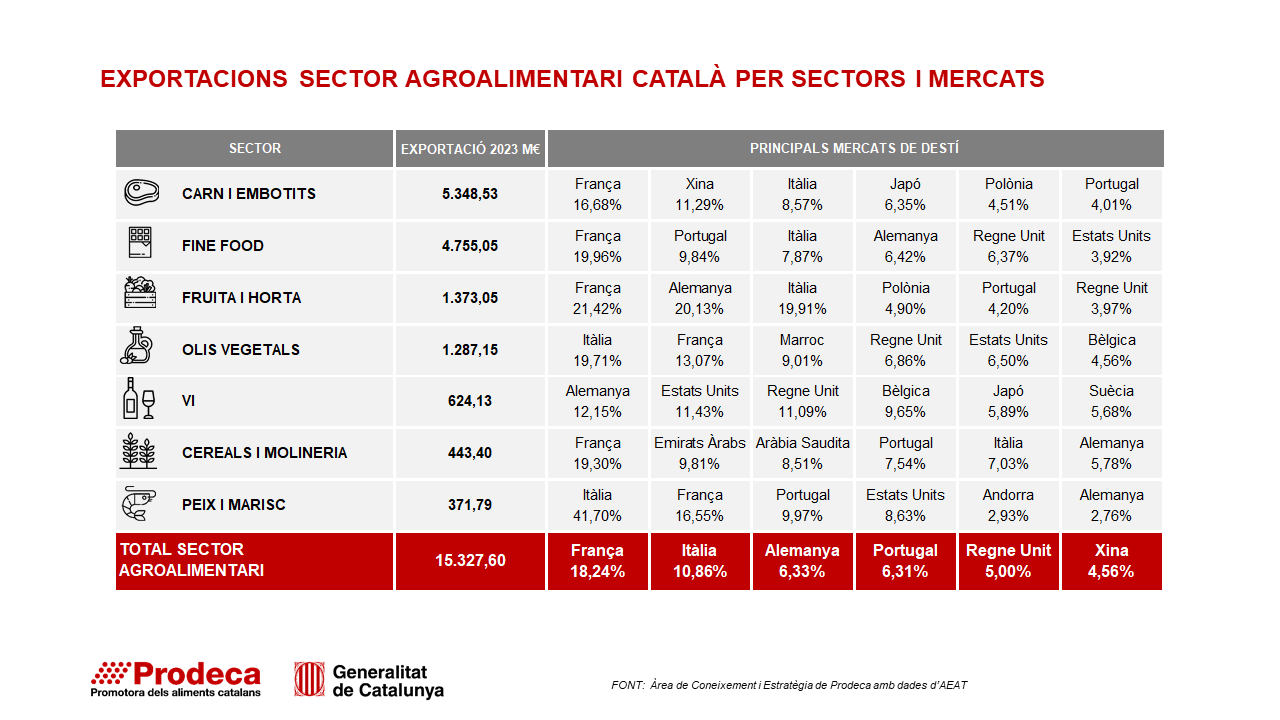
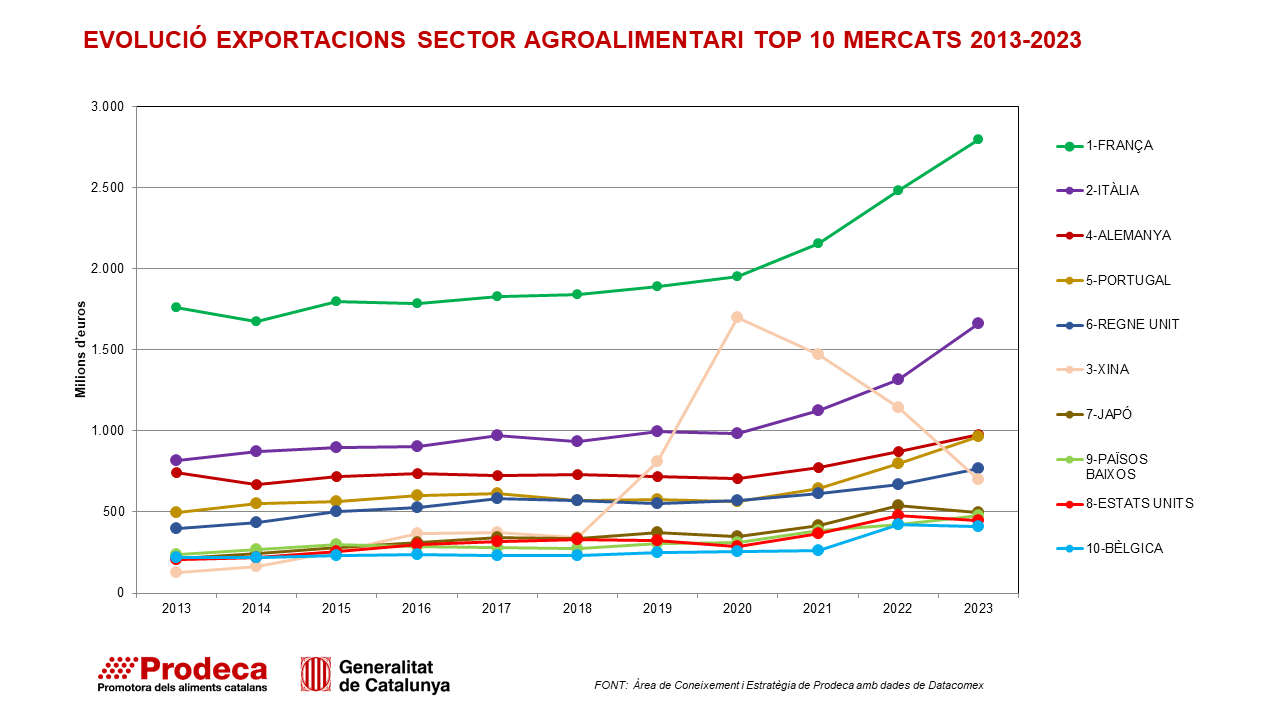
By country, France remains the leading destination while Italy consolidates as second. Asian markets fell significantly overall, by 26.78%. China specifically fell 38.92%, dropping from third to sixth place, behind Germany, Portugal and the United Kingdom.
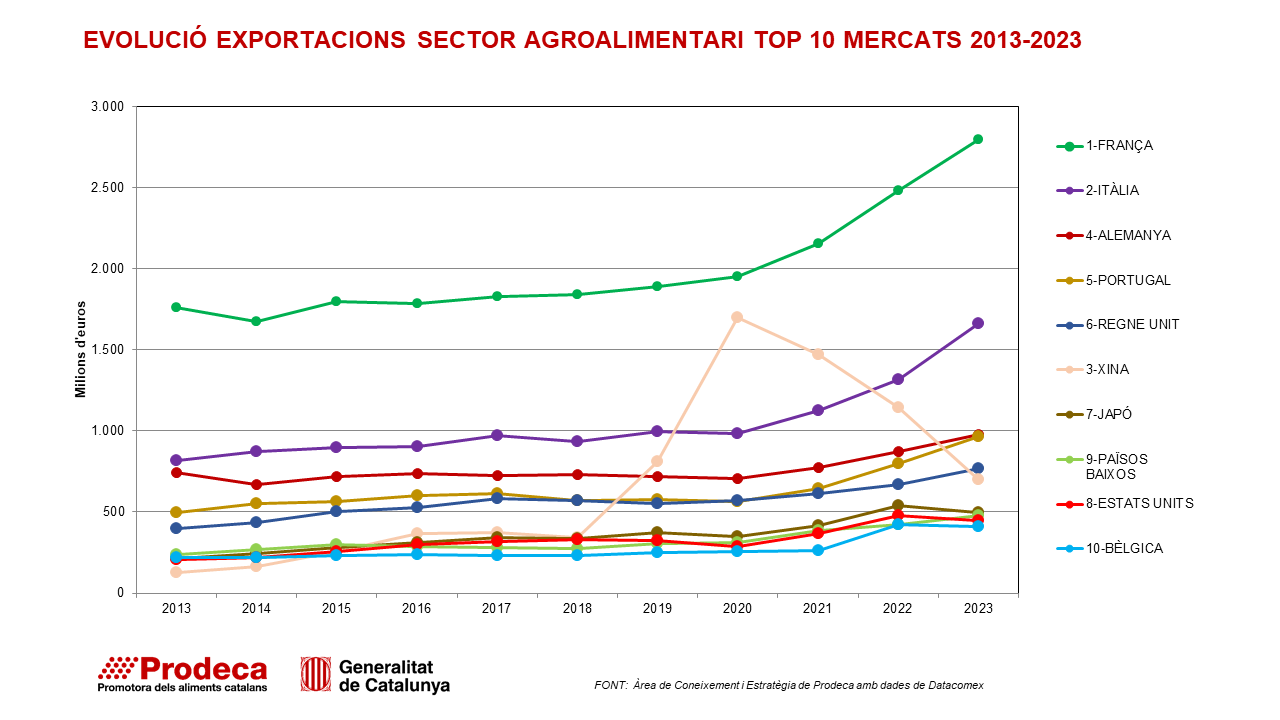
The number of regular Catalan agri-food exporters (those with at least four consecutive years of overseas sales) also remains stable at 2,995 (+91 companies on 2022).
Catalan companies optimistic about 2024
The macroeconomic export data provided by customs match Catalan companies' own impressions and assessments, conveyed through the Prodeca Agri-food Export Barometer. This is a quarterly monitoring tool for the most relevant business figures on the export activity of Catalonia's agri-food sector, launched in 2023, gathering companies' perceptions, trends, challenges and outlook in foreign trade.
Companies give a moderately positive assessment of export activity in 2023 compared with 2022: exporters for whom this year was better than 2022 outnumber those who say it was worse by 10 points. They are also optimistic about 2024: more than 60% of the sample think 2024 will be better for agri-food exports than 2023, and only 8% think it will be worse.
As for the factors affecting export activity, international price competition has the greatest influence, followed by raw material prices, inflation and transport costs. Wars, international conflicts, production shortages and drought are threats that gained weight in 2023.
You can download the various waves of the Catalan Export Barometer on Prodeca's website.