


DO Alella
DO Alella Regulatory Council
Address: Masia Museu Can Magarola Av. Sant Mateu, 2
08328 Alella
Telephone: 935 559 153
E-mail: doalella@doalella.org
Website: http://doalella.com/


This is the smallest DO in Catalonia and the closest to Barcelona.
The typical soil, “sauló”, gives the wines special attributes due its high drainage which makes the vine roots grow very deep and acquire a high mineral content.
Its best-known wines are whites made with the local variety Pansa Blanca, the local adaptation of Xarel·lo.
The DO Alella is the smallest in Catalonia, with a vineyard surface area of only 223 hectares, under urban development pressure from neighbouring Barcelona. Wines from Alella have been a favourite among the people of Barcelona since the Middle Ages, later becoming one of the most widely exported Catalan quality wines, especially to the “overseas colonies” where there was a large Catalan population.
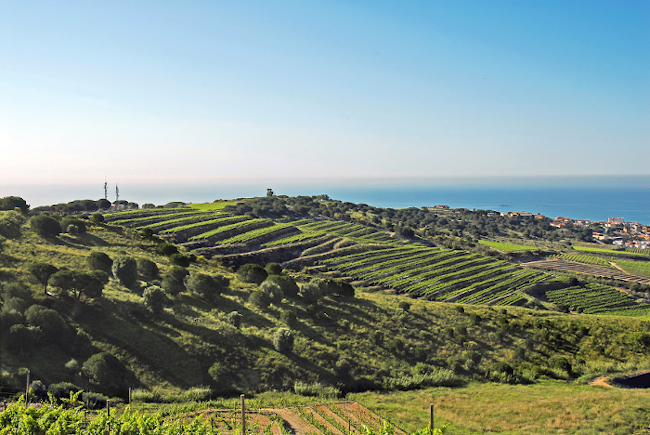
Initially, all of the vineyards were on the land between the Catalan Coastal Range and the Mediterranean Sea, although there are now also vineyards on the inland side, extending to some of the towns in the Vallès Oriental. With the recent extensions, it now comprises 30 municipalities spread over the counties of Maresme, Vallès Oriental and Barcelona.
In 1998, the historic Cooperativa d’Alella was privatised, accepting the offer that best guaranteed the continuity of the legendary ‘Marfil’ brand and the purchase of grapes from the former cooperative members. Over time, concerns have been allayed that property development - the main competitor for local land - could endanger the future of the DO, as new wineries have opened, new vineyards planted, and the DO region extended.
Pansa Blanca, the grape of Alella
The grape variety most linked to wines from the DO Alella is the native Pansa Blanca. Although it is genetically the same variety as the Penedès Xarel·lo, several local conditions such as the light, as it is largely planted on east-facing slopes, the soil - “sauló”, which enables good drainage and therefore prevents the first autumn rains from watering down the must, and the very mild climate close to the sea, mean that average production per vine is very low. This results in highly aromatic wines with notes of green almonds and with a robust body and structure, which make intense wines with a very distinct personality. In the past, semi-dry whites were the most typical of the area, although today dry whites and reds are more common. Recently, in addition to the traditional Pansa Blanca, other almost extinct varieties of grape are being reintroduced, such as the red Mataró (Monestrell) and Garnatxa, as well as the white Picapoll and Garnatxa Blanca.